
How to Make Leaving Your Newsletter Feel Like Ditching A Good Friend
Substack Chat won’t get you new subscribers. It does something better: it makes leaving feel like a loss. Here’s how to run it, plus the one thing that quietly ruins it.

Good writing gets you read. It doesn’t buy you an off week. And there’ll be off weeks, when a reader held by nothing but your prose just goes. No guilt, no warning.
Substack handed you the tool for that, and you’re probably running it as a second mailbox.
The obvious part first, so we can move past it: Chat won’t win you a single new subscriber. It’s private, subscriber-only, invisible to anyone who hasn’t already joined, and no stranger will ever wander in. Everybody who’s opened one figured that out inside a week, decided it was pointless, and let it go dark in a corner next to their 3rd abandoned podcast.
It wasn’t pointless. It was the one place you build what the writing can’t: readers who’d have to walk out on people, not just close a tab.
The public work (Notes, comments, restacks) earns you the subscriber. Chat is where you take it from there, walking that reader inward: warm to closer, closer to the inner ring, your best people kept from quietly drifting out the back while you weren’t looking. The inner orbit (the warm ones, the readers already worth something) holds your loyalty and your money both. And every one of those relationships is one neglectful month away from being worth nothing at all. Chat’s the best tool Substack hands you for keeping them warm.
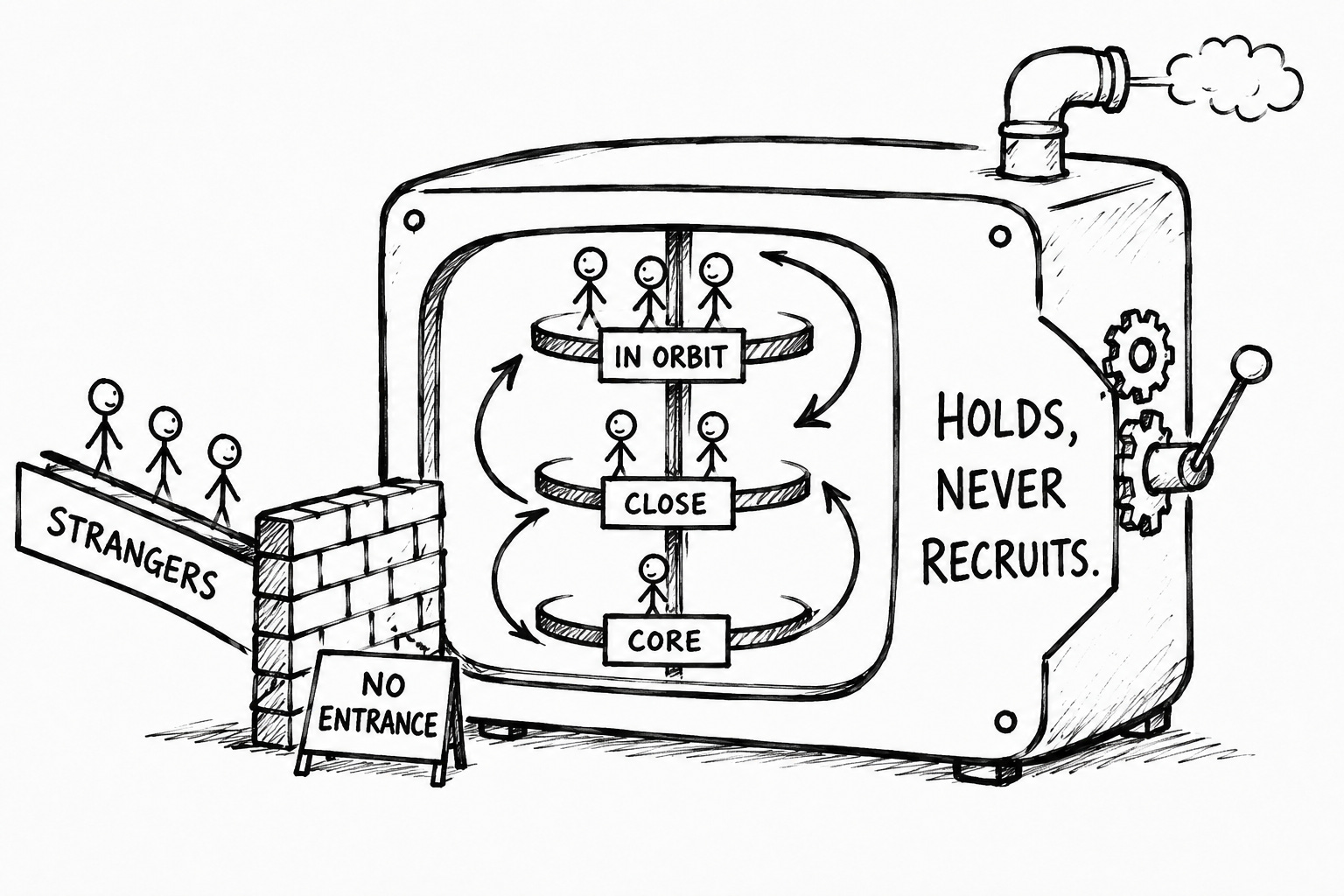
The mechanism’s worth understanding instead of taking on faith.
A reader who only gets your posts is subscribed to your content. The week your writing has an off stretch (it will, you’re not a machine, thank god) the whole math of staying is “was the work good enough this week.” But a reader who’s posted in your Chat, gotten a real reply, had their name said out loud, traded jokes with two other members they now half-know? That person’s subscribed to something way stickier than your prose. Leaving stops feeling like unsubscribing and starts feeling like bailing on people who’d notice they were gone.
Nobody does that over one slow month. Belonging’s a switching cost, and it’s the strongest one you’ll ever build on purpose.
Now the part nobody warns you about until they’ve already torched it.
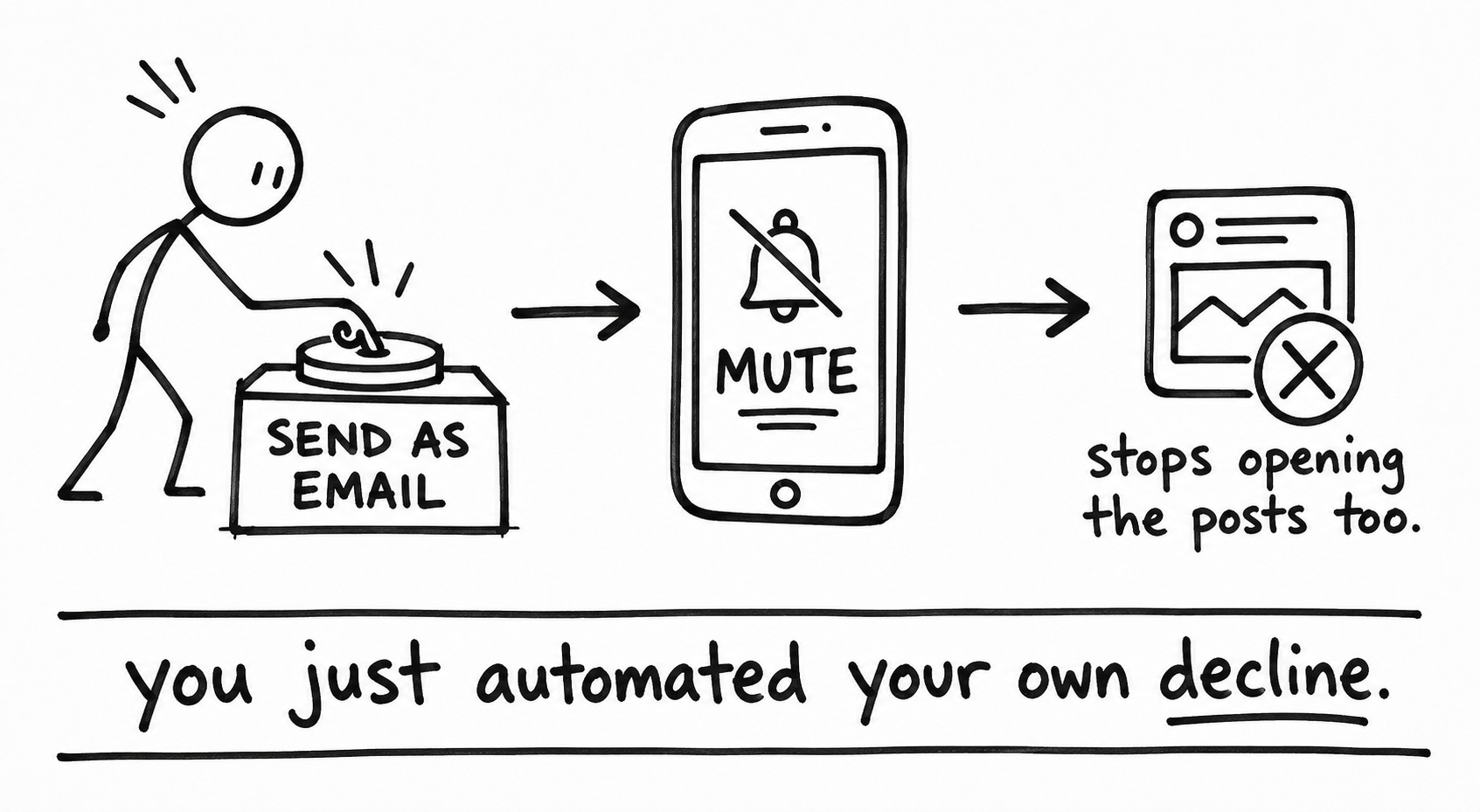
Every new thread can fire a push notification to every subscriber. And you can staple an email onto any thread with one little toggle, dropping it straight into every inbox you’ve got. That toggle is the single most abusable button in the whole feature. Treat your Chat like a content feed that needs feeding (six threads a day, half of them emailed) and you won’t build a community, you’ll train people to mute you. And a mute isn’t contained. It frays the notification line you rely on for everything else, and some of those muted folks quietly stop opening the posts too. Congratulations, you’ve automated your own slow decline.
So the email toggle is for events. The live session. The actual announcement. The flagship thread of the month. Not the fucking Tuesday check-in.
And the flip side, the thing that sends new hosts spiraling for no reason: silence is normal. A Chat isn’t a Discord server with a caffeine problem. It’s episodic. It’ll sit dead quiet for three days and then go off around the right prompt on the fourth. A six-hour gap isn’t a verdict on your worth as a human. Post it, tend it, let it breathe, and stop refreshing the room every twenty minutes like a guy waiting on a text back from someone who’s clearly just not into him.
One gut-check before you ever switch it on: am I doing this to pull people in, or to hold people close? If the honest answer’s “pull in,” put the mouse down. You don’t need a room. You need to go get found first, because a room can’t do that for you.
But if you’ve already got readers in your orbit (people who’d answer if you actually asked) then you’re holding the raw material a room runs on. That’s who Chat’s for. Not the strangers you haven’t met yet. The people already standing close, waiting for one good reason to come closer.
Notice I haven’t actually told you how to do any of this yet. That’s tomorrow. Check your inbox in the morning for the real tactics: the prompts that pull a silent room into a conversation, the weekly rhythm that keeps it going, and the moves that turn a subscriber list into a room that runs on its own. Today was the why. Tomorrow’s the how.
Getting found pulls strangers in. Chat holds the ones you’ve already got close. Run one when you needed the other and it fails on you quietly, which is the most expensive way anything ever breaks.
Crafted with love (and AI),
Nick “Keeper of the Inner Orbit” Quick

PS... If you got something out of this, two small asks. Subscribe if you haven’t (the button’s right there, doing its little job). Then forward it to the writer you know who flipped on Chat eight months ago, posted “hey everyone!” into the silence once, and hasn’t been back since. They need this more than you do. They won’t admit that either.
PPS... Most of what I just described, I run through an engagement platform I’ve been building for clients on the hush-hush, code-named Stackwise. It’s the part of today’s post that stopped fitting in my head: who’s drifting, who’s close, who needs a nudge this week. Curious what’s going into it? Reply to this email or flag it in the comments and the First-500-Subscribers guide is yours. (It’s a deeply unsexy opt-in. I just have a soft spot for the people who bother to hit reply.)
OK, ya piqued my interest. I’m just a lowly non paying subscriber, but I read your posts every day. Your knowledge and honestly funny delivery keep me coming back. I’d be thrilled if I may be deemed authentic enough to receive your guide.
And while I momentarily have your attention, I’d love to hear your wrap on these so-called “humanizer” apps (Walter Writes AI is the one that revealed this concept to me).
Thanks for your regular dose of learning spiced with humor!