
Stop Guessing What to Build. Your Notes Already Know.
The six-step system for mining Substack Notes for the thing people will actually pay for.

I once spent eleven weeks building a product nobody wanted. (Ok, ok, more than once. I’m extremely consistent at building things nobody asked for.)
This is the one with the cleanest timeline. Eleven actual weeks, start to finish. I had a landing page, a payment processor, six testimonials I’d extracted from clients with the gentle persistence of a timeshare closer, and a little animated checkmark that pulsed every time someone hovered over the buy button. I was unreasonably proud of that checkmark. I’d built every component of a functioning business except one: a human being willing to trade money for it.
(The checkmark, to its credit, performed flawlessly. It pulsed at no one, all day, every day, like a lighthouse somebody’s still paying the electric bill on, for a coastline with no ships and no plans of getting any.)
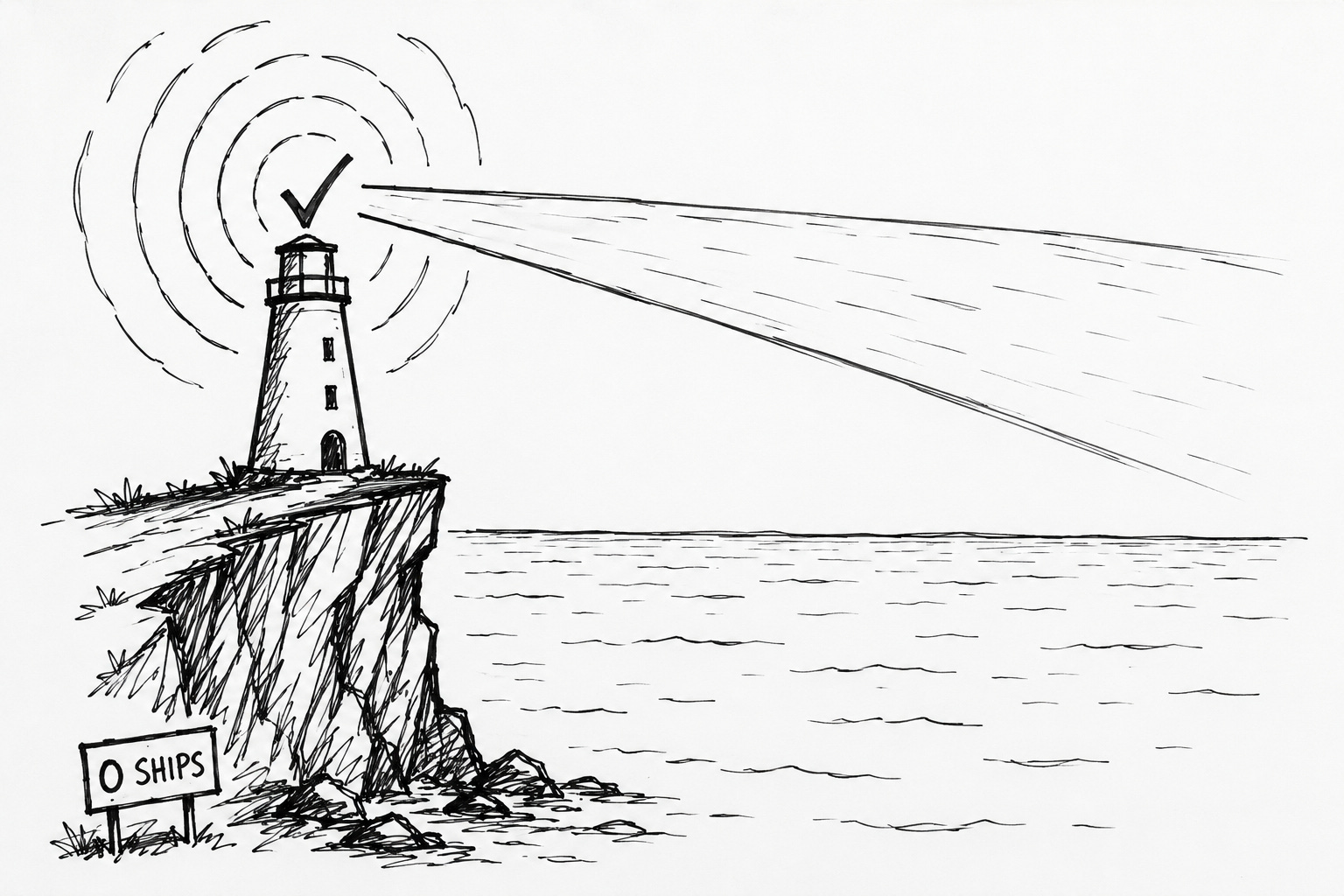
What had I done wrong? I guessed. I sat alone in a room and decided what my audience needed with the rigor of shaking a Magic 8 Ball until it landed on the answer I already wanted. Earnestly. Confidently. With zero supporting evidence.
Here’s the part that still bothers me several months later, the way you think of the perfect comeback to an argument long after the argument’s over: my audience had been telling me exactly what they wanted the whole time.
Nobody Asked You to Build That
My eleven-week mistake wasn’t a one-time lapse in judgment made only by myself. It’s the default setting for how most people decide what to build next.
You get a hunch. The hunch feels solid, mostly because it’s yours and you’ve been marinating in it for weeks, which is a terrible test for whether an idea is good and a great test for whether you’re attached to it. You build the thing alone, behind a closed door, the way you’d defend a thesis nobody’s allowed to read until the day it’s due. Then you publish the offer.
And what comes back isn’t pushback. It isn’t even a polite no.
It’s crickets. You’d have gotten a better response standing at the edge of your driveway with a poster board, yelling random prices at oncoming traffic.
And here’s the part that should make you want to lie face down on the kitchen floor for a minute: the answer was sitting in your replies the entire time. You walked right past it on your way to go build something nobody asked for.
Substack Notes are not just a place to post half-baked ideas and refresh for the dopamine hits. (Several thousand accounts would loudly disagree with me on this, several times a day, but several thousand accounts are also the problem.) Used correctly, Notes are a live, ongoing, completely free research panel made up of people who’ve already opted in to caring what you think. The signal is there. Almost nobody is reading it as signal. They’re reading it as a content calendar.
Here’s the actual difference, in one sentence: a Note that performs well tells you what’s interesting. A Note that gets real replies, the “I’m dealing with this exact thing right now” kind, tells you what to build. Most people only ever go looking for the first one.
So before you build anything else, here’s how to actually use the thing you’re already sitting on.
The Cure for Crickets
Here’s the cure, in six steps. It starts with choosing one problem with actual money attached to it.
Step 1: Pick a problem with a pulse. Not "manifestation." Plenty of people buy "manifestation." Somehow the universe keeps not delivering, and somehow that's never the methodology's fault. You want a problem with a pulse and a price tag. Something like: I've lost the same fifteen pounds three times and gained it back every single time. That sentence has rent attached to it. “Manifestation” has a vision board attached to it, and I kept mine up for two years. The rent situation never improved.
Step 2: Publish ten angles on it. Take that single problem and poke it from ten different directions, watching closely to see which poke makes somebody yelp.
Diagnose it. Take the unpopular position on it. Confess the dumb mistake everyone makes with it, yourself included, because that one always lands. Tell the tiny story of the time it bit someone in the tookus. Ask the blunt question nobody else is asking. Walk through the boring process. Say the objection out loud that everybody’s too polite to admit. Name the consequence of ignoring it. Lay the before and the after side by side. Dare somebody to tell you you’re wrong.
That’s ten, and no, you’re not fishing for the cleverest sentence. The cleverest sentence is a trap. It earns applause and teaches you nothing. You’re fishing for the framing that makes a stranger stop scrolling, and wonder, seriously, if Google sold your personal search history again.
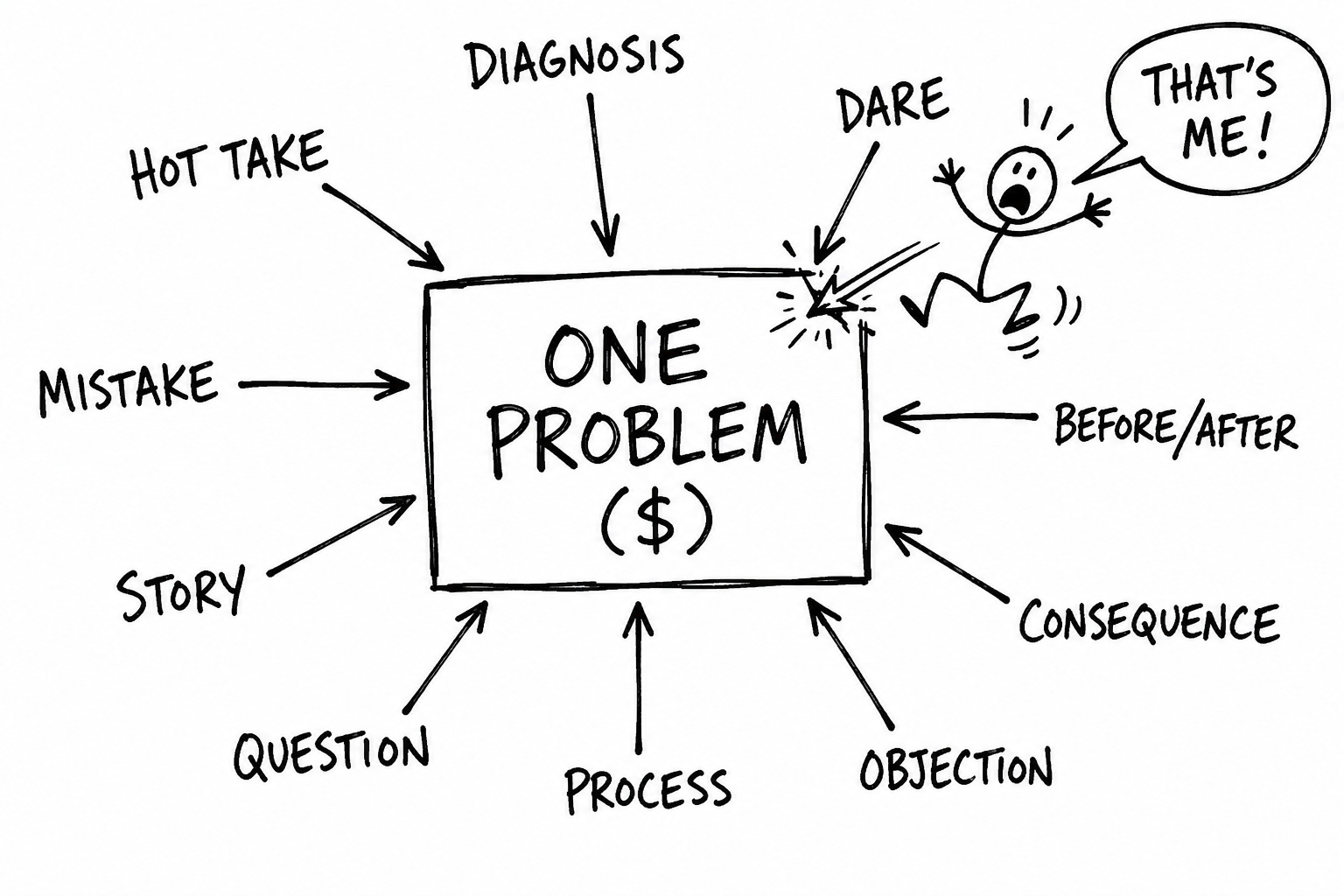
Step 3: Write down the language that comes back. This is the step almost everyone skips, because it requires shutting up and paying attention.
Which Notes pull actual subscribers, not just claps. Which question keeps bobbing to the surface of your replies like a cork you can’t hold under. Which comment opens with “I’m dealing with this exact thing right now” (mark that one, it’s a flare). Which objection refuses to die no matter how many times you bury it. And, most valuable of all, which phrases your readers use that you’d never put on a landing page yourself, because you’ve been marinating in your own industry’s vocabulary so long you’ve forgotten what an actual human sounds like. (This isn’t unique to you. A debt counselor says “debt consolidation strategy.” Their actual client says “I don’t know which card to pay off first and I’m scared to look.” Yours is happening too, you’ve just stopped being able to hear it.)
That last one is the entire prize. Product research you didn’t have to commission, gathered from the only focus group that’s ever told the truth: the one that doesn’t know it’s a focus group.
(A word on surveys: don’t, or at least not first. A survey is where honest answers go to quietly expire. The instant a question lands in a form, people stop telling you what they want and start telling you what they suspect a reasonable person ought to want, which is a different thing entirely and useful to nobody, least of all the reasonable person, who as far as I can tell has never bought anything from anyone.)
Step 4: Promote the winner into long-form. Once a framing draws blood, you build on it. The Note proved the nerve exists. The article does the actual work of digging that nerve out and turning it over under good light. The comments on the article then tell you, with almost rude precision, what you still haven’t answered.
Step 5: Build the smallest sellable thing. A checklist. An audit. A template. A live teardown. A one-page diagnostic. Not a forty-three-module course filmed alone in a closet at two in the morning with the production values of a hostage video. Something narrow enough to ship by the weekend and useful enough that a stranger pays for it without being asked twice.
Step 6: Watch the room sort itself. Here’s what actually happens once a problem’s been named clearly enough: people stop being an audience and start being applicants.
The people who reply, subscribe, argue, buy, and come back with the follow-up question are sorting themselves. By intent. In public. Directly in front of you. You didn’t assemble a cold list and pray over it. You didn’t buy a thousand email addresses and interrupt a thousand dinners. The interested ones walked toward the thing that named their problem and stood there, waving. You stop guessing who your market is, because you’re watching it assemble itself, one self-selected human at a time.
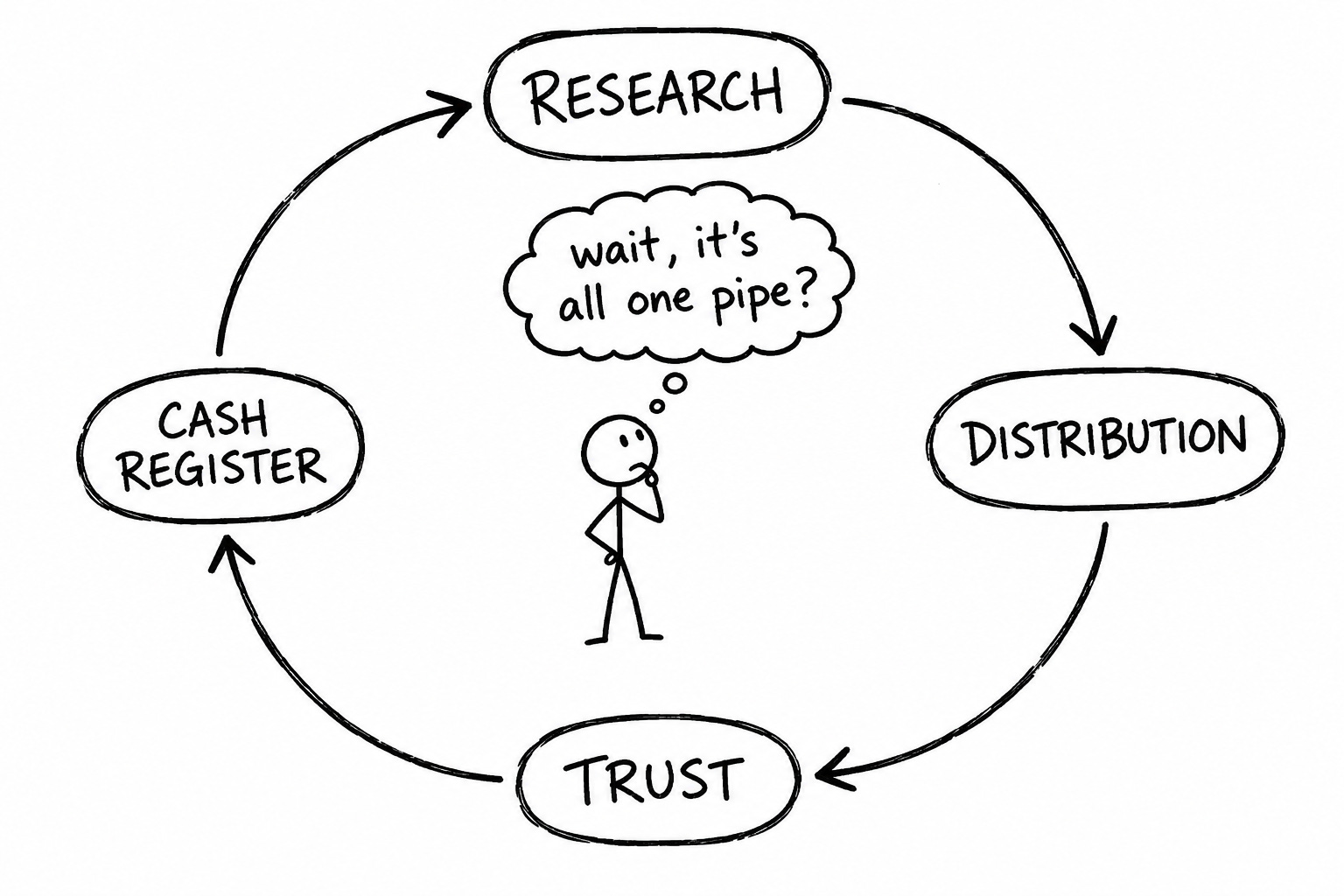
I still think about that checkmark sometimes. Pulsing away, doing its job perfectly, for nobody. The product never sold. I shut it down eventually, but the checkmark’s logic didn’t, it’s just aimed correctly now. The next thing I built started with a question instead of a guess, and I asked it out loud, in public, before I wrote a single line of anything.
Ask first. Build second. Everything else on this list is just logistics.
Crafted with love (and AI),
Nick “Unpaid Focus Group of One” Quick

PS... If your AI keeps sanding every Note down into the same oatmeal-toned LinkedIn voice, that's not a content problem. That's a voice problem, and it's the one thing all this audience research can't fix for you on its own:
The system walks you through getting the machine to sound like you instead of every other account currently typing “consistency compounds” into a sunset. Or keep building on hunches and hoping the next one lands. The crickets aren’t going anywhere either.
PPS… If you want to test this without building a single thing, hit reply or leave a comment and tell me the one problem you’d run through this system first. I read every reply, partly to help and partly because, yes, you just became part of the research panel whether you signed up for it or not. (The transparency’s part of the brand. Allegedly.)
Mining your own notes for real audience problems is smarter than guessing what to build.
The tools most people have access to still come with clear constraints. Whole subjects get refused, answers shift on the same facts, and the person doing the actual research ends up rewriting large sections. That design keeps independent creators working with a limited version of the technology.
I traced the longer history of how the knowledge tools have been controlled here:
https://sleuthfox.substack.com/p/why-your-ai-always-leaves-fingerprints