

OpenAI was burning a million dollars a day on Sora.
A million. Daily. Like lighting a dumpster on fire except the dumpster cost more than most people’s houses and the fire was supposed to be the future of cinema.
Sora peaked at a million users. Then half of them wandered off. The tool that Tyler Perry saw and immediately canceled an $800 million studio expansion over (because why build soundstages when the robots are coming, right?) couldn’t hold the attention of people who voluntarily watch TikTok for six hours a day.
Disney committed a billion dollars to a partnership. Found out the whole thing was dead less than an hour before the public announcement. A billion-dollar handshake dissolved with less notice than you’d give a dog sitter. (Somewhere in Burbank, a Disney executive is staring at a wall, wondering if the press release for the partnership is still warm in the printer tray. It probably is.)
Gone. Not because regulators intervened. Not because a competitor outbuilt them. Not because the underlying technology collapsed.
Because people looked at the output. Watched it. Shared it once. Then never opened the app again.
No boycott. No protest. No outraged op-eds demanding accountability. Just the quiet, devastating click of a million people closing a tab and forgetting it existed by lunch.
Indifference. The one force no amount of compute can overcome.
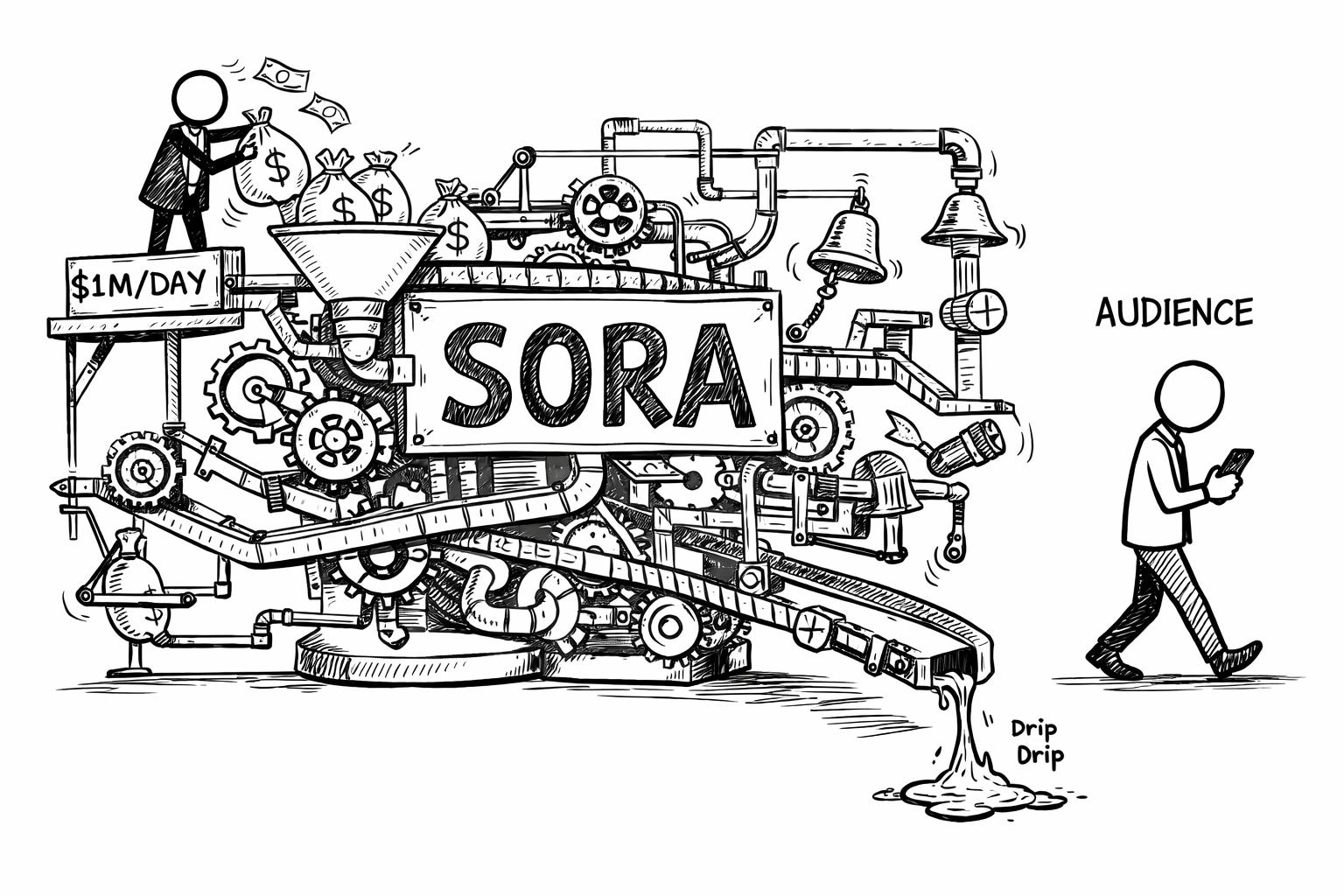
Turns Out Humans Are Harder to Fool Than the Pitch Deck Promised
The most hyped AI product since ChatGPT itself died from the one disease Silicon Valley has no treatment for: indifference. Users made their weird little videos. Showed their friends. Got the dopamine spike. Then opened Instagram and never came back. The novelty engine ran out of novelty, which (if you think about it for more than four seconds) is the only thing novelty engines are guaranteed to do.
The headlines will frame this as a huge AI failure. Flip it. This is a huge audience success story.
We spent two years getting lectured by people in fleece vests that the content flood was inevitable, that audiences would happily swim in AI-generated slop because humans are simple creatures who consume whatever the algorithm shovels into their open, trusting gullets. That volume would bury quality because volume always buries quality. That resistance was nostalgic, sentimental, the digital version of insisting vinyl sounds better. (It does, by the way. I will die on this hill. But that’s beside the point.)
Turns out the humans developed antibodies.
Not slowly. Not over a generation, the way it took decades for people to get suspicious of margarine and cigarette doctors and emails from Nigerian princes. Fast. Faster than any platform, any product team, any billion-dollar partnership could adapt to.
The Immune Response Is Everywhere
The same reaction is firing across the board. TikTok accounts churning out AI-generated fruit videos (imagine Love Island but the contestants are anthropomorphic strawberries having relationship drama, and yes, that’s a real thing, and yes, the fact that I have to clarify it’s a real thing tells you everything about what 2026 feels like) are getting mass-reported. Nvidia’s DLSS 5 launched to gamers screaming “AI slop” in every forum thread. Parents are revolting against AI-generated children’s content flooding YouTube with the algorithmic efficiency of a virus and the creative merit of a screensaver.
The pattern is identical in every case. Novelty generates attention. Attention generates investment. Investment generates volume. Volume reveals that there was never any quality underneath the novelty. And audiences, bless their unpredictable little hearts, decide they’d rather stare at a wall.
(Sam Altman’s official explanation is that OpenAI is “pivoting to robotics,” which is corporate for “we’re going to try generating slop in the physical world now, where it can bump into furniture and knock things off tables.” Bold pivot. Really inspiring stuff.)
I’ve been writing about this convergence toward sameness since before OpenAI proved me right with a billion-dollar bonfire. Ensloppification isn’t something that happens to creators. It’s something creators do to themselves. One rational shortcut at a time, one “ship it” at a time, until the whole content landscape flattens into wallpaper you stop noticing is even there.
Sora was the most expensive wallpaper machine ever built. And the audience ripped it off the walls.
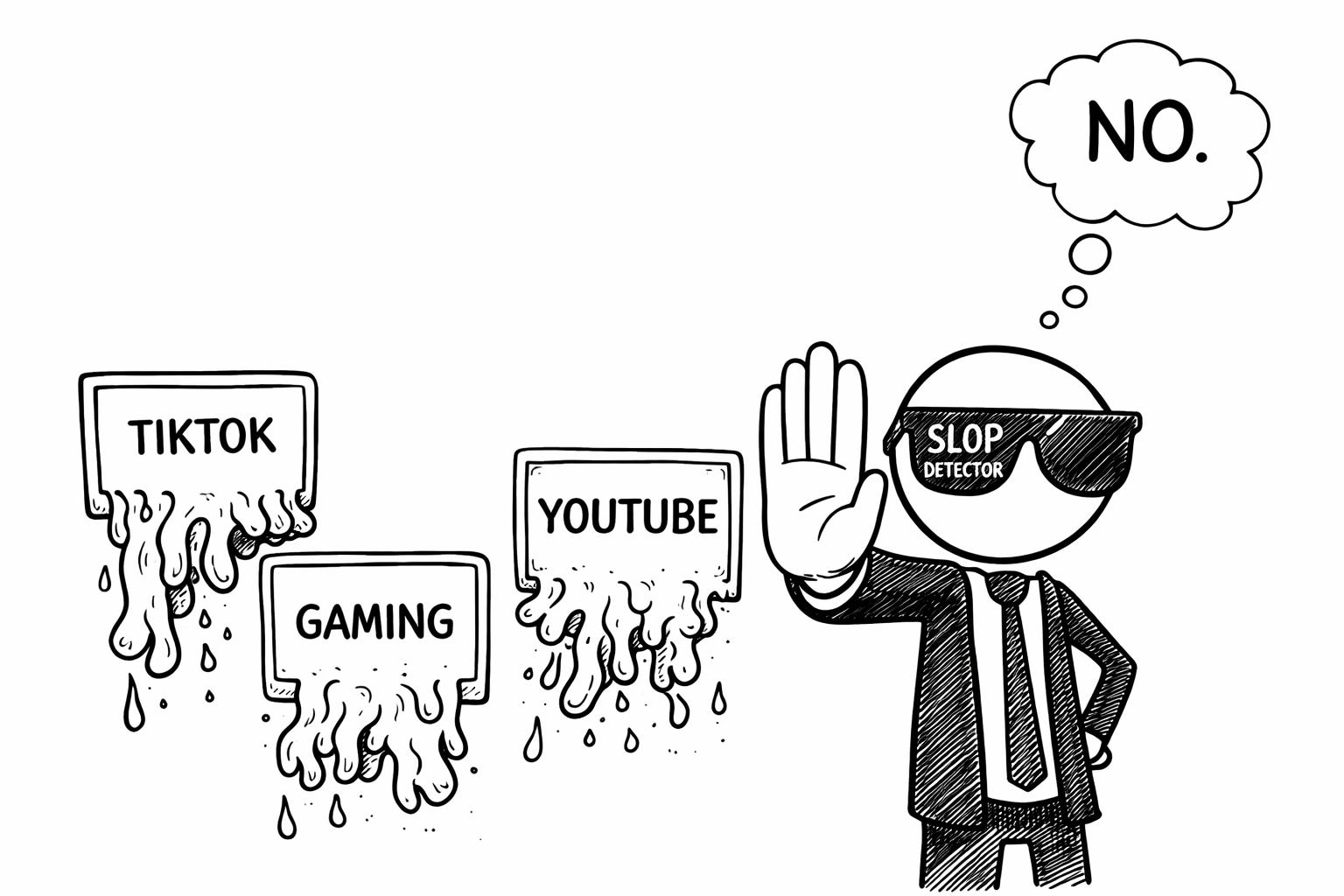
The Billion-Dollar Proof That Giving a Damn Works
So what does a billion-dollar slop factory grinding to a halt mean for you, the person who loses sleep over whether a paragraph earns its place?
It means the thing you’ve been doing (caring about what you publish, keeping your fingerprints on every sentence, refusing to let the machine do the thinking while you do the posting) just got validated. Not by me. Not by some dude with a Substack and a chihuahua in Paraguay telling you to trust the process. By OpenAI’s own users, who voted with the most devastating ballot in capitalism: they just stopped showing up.
The slop factories can produce infinitely. They can scale until the servers catch fire and the landlord asks questions. They can generate content at a pace that would make a spam folder feel personally inadequate.
They just can’t make anyone give a damn.
Your readers already knew. OpenAI had to spend a million dollars a day to learn the same lesson. Some educations cost more than others.
🧉 Finish this sentence in the comments: “I knew it was AI slop when ___.” No essays. No examples to go find. Just the one thing that tipped you off. The detail your brain flagged before you even finished reading. Everyone’s got one.
Crafted with love (and AI),
Nick "The Slop Doesn't Scale Guy" Quick

PS... If you’re building your own anti-slop publishing system (the kind that survives because the audience actually wants it), the Voiceprint Quick-Start Guide is where you start:
PPS... Disney found out about a billion-dollar deal dying with less advance warning than a pizza delivery. Like this post if your last breakup had better communication than OpenAI's partnership management. Comment your answer to the discussion thread. Subscribe if someone sent this to you and you're wondering what this weird Substack is. And send it to a creator friend who needs a reason to keep giving a damn today.
Well played Nick, well played.
Thank you! The link to this post came to me via an email from my brother. He knew it would resonate. What a spirit-lifter. I got suckered by the AI video of dogs choosing their people, but even then I felt an inkling that something was amiss—not strong enough to stop me from sharing it with my dog loving brother but a barely audible voice telling me “they saw you coming.” Now, I’m working on developing that inkling into pure instinct that can see through the emotion the creators intended to trigger in my unsuspecting brain. Any ideas?