
The Bowling Pins Are Dancing and Nobody’s Watching
What Iranian Lego propaganda taught me about the only thing that matters in content

If you missed the White House posting AI-generated dancing bowling pins to celebrate airstrikes on Iran last month, I envy you. But you need to see this, because it’s a striking example of a content failure. And the failure has nothing to do with AI.
Here’s what happened: the official White House X account posted a 30-second video. Animated bowling pins with smiley faces, labeled “Iranian regime officials,” getting knocked down by an American-flag bowling ball. “Free Bird” playing in the background. The caption was just “STRIKE.” 40 million views. Almost universally mocked.
The most resourced communications operation on the planet, with access to every tool, every model, every platform, every dollar, produced content that could have been a GIF from a regional bowling alley’s Facebook page. Dancing bowling pins. Celebrating a war. With a shimmy.
(The pins had little animated faces. They looked happy about the airstrikes. I am not editorializing. This happened.)
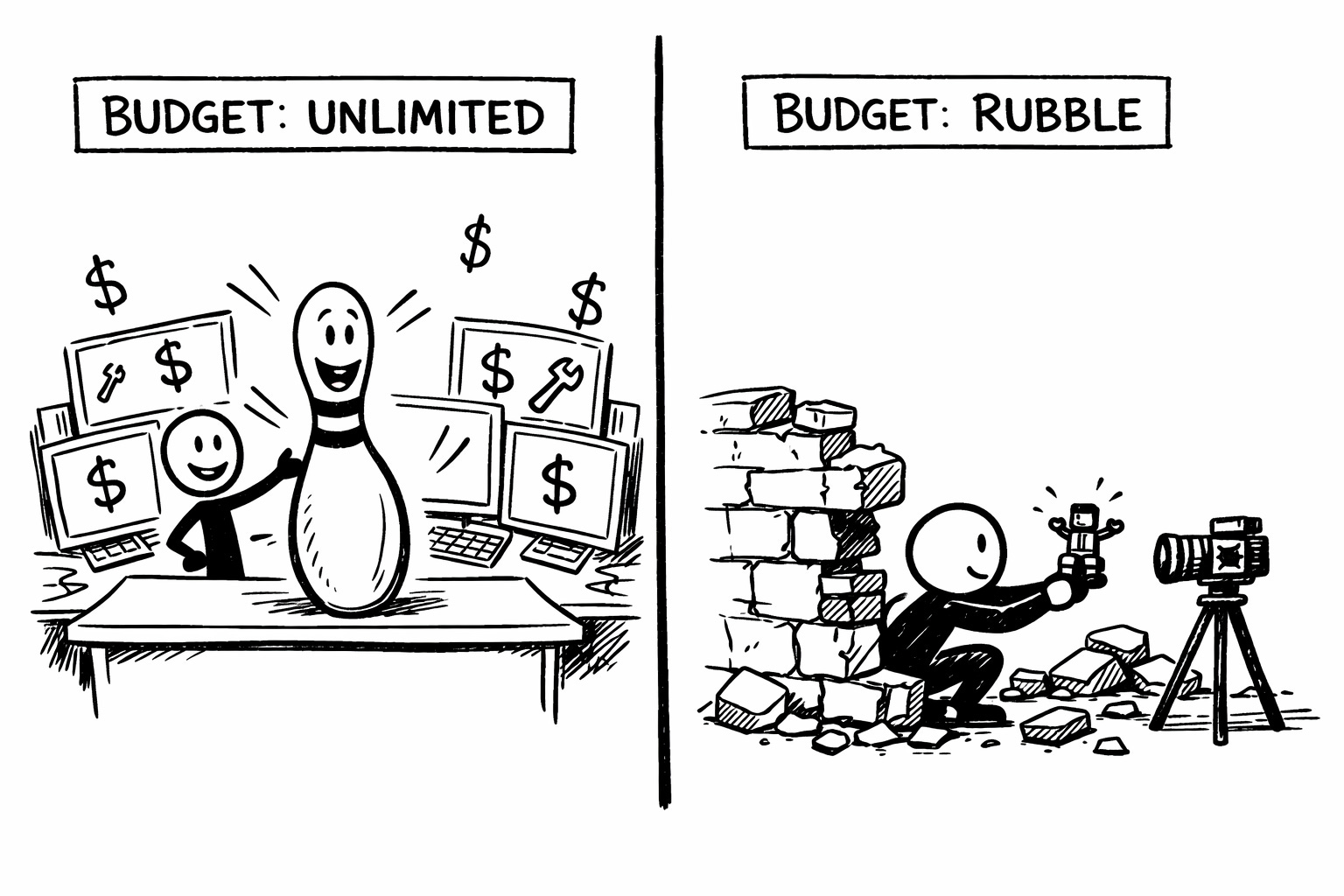
Meanwhile, a content group operating under active bombardment produced AI-generated Lego videos that reframed the entire narrative. The US military as bumbling clowns losing planes. Trump as a Lego figurine getting upstaged. Covered by every major outlet. Not mocked. Studied.
Same tools. Same platforms. Same week.
One became wallpaper. The other became the story.
“Heart”
Somebody at The Verge asked Explosive Media why their stuff spreads. They could’ve said anything. Better rendering. Faster production. Superior understanding of the algorithm.
Their answer was “heart.”
Heart. From a propaganda outfit. Working under the Iranian regime. Producing content designed to manipulate global opinion during a war.
I hate that a regime propaganda outfit just articulated what I've been trying to teach for six months in a single word.
Because what they actually mean (stripped of the geopolitical horror) is: “We have a point of view. We know who we’re talking to. We know what we want you to feel. Every frame serves that intention.”
The White House content team had none of that. They had a directive (”post something positive about the operation”), a set of AI tools, and no idea what they were trying to say. So they said nothing. Loudly. With lame-ass dancing pins.
The Slop Didn’t Come From the AI
This is the part that should gnaw at every creator reading this.
The White House video wasn’t bad because AI made it. It was bad because nobody had anything to say before they opened the tool. The AI did exactly what it was asked to do. The ask was empty.
The tools didn’t fail. The intention did. That’s what ensloppification actually looks like when you strip away the theory. Not a technology problem. A nothing-to-say problem.
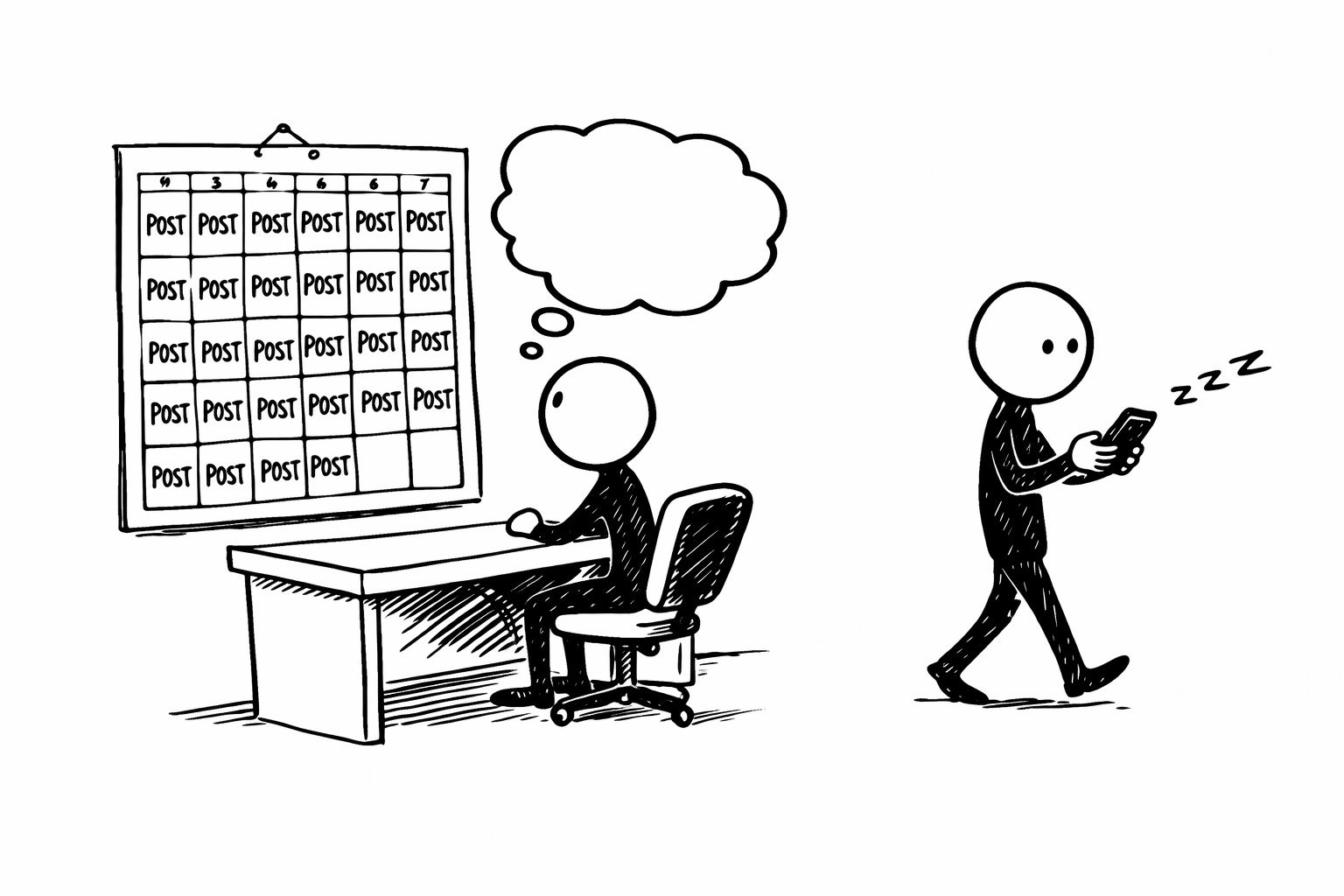
And that’s the same dynamic playing out in your feed right now. Someone in your niche is using the same AI tools you use to produce content that feels like it was generated in a vacuum. No point of view. No specific audience. No reason to exist beyond “it was Tuesday and the content calendar said post.”
That’s content without intention. Your audience scrolls past it the same way 40 million people scrolled past animated bowling pins and thought “what am I looking at?”
The Question That Actually Matters
Every creator conversation I hear is about which tools to use. Which model. Which workflow. Which automation.
Nobody's asking the question that the Lego videos accidentally answered: do you have something to say?
Not “do you have content to post.” Not “do you have a topic.” Not “do you have a content pillar and a funnel stage and a keyword target.”
Do you have a point of view that would survive if you stripped away every tool and wrote it on a napkin with a crayon?
(If you can’t say what you believe in one sentence without referencing your niche, your audience, or your product, you might be producing content without intention. And your audience can tell, even if they can’t articulate why they scrolled past.)
The propagandists knew exactly what they wanted their audience to feel. Agree with them or not (and to be clear: they’re a regime using content as a weapon, which is its own gnarly conversation), they had intention behind every frame. The White House response had a content calendar and a render queue.
One of those approaches works. It has always worked. It will always work. The other produces slop at scale, and no amount of budget or tooling fixes it.
Before You Open the Tool
Four questions. Thirty seconds. Before every piece.
What’s the one thing I believe about this topic that most people get wrong? If you can’t answer this, you don’t have a point of view yet. You have a topic. Those aren’t the same thing.
Who specifically am I trying to change the mind of? Not “my audience.” A person. What do they believe right now that this piece is designed to challenge?
If I stripped away every formatting trick, every framework, every visual, what’s the sentence I’m building this around? Write it on a napkin. With a crayon. If the napkin is boring, the post will be too.
Would I still publish this if nobody saw the metrics? If the answer is “probably not,” you’re filling a calendar slot, not saying something. That’s content without intention.
Still Dancing
Somewhere on a government server, there’s a shared drive labeled “Social Assets Q2.” The dancing bowling pins are in there. Ready for the next campaign.
Nobody’s watching.
The Lego videos have a Verge profile. Not as a curiosity. As a case study.
Same tools. Same week. Same war.
Different intention.
That’s the only thing that’s ever mattered. And the gap between “has tools” and “has something to say” is getting wider every single day.
🧉 When’s the last time you posted something where you genuinely had something to say versus just filling a slot on the calendar? Serious question. I filled a slot this week and the numbers showed it. The audience always knows.
The intention gap is the only gap AI can’t close.
Crafted with love (and AI),
Nick “Napkin and a Crayon” Quick

PS... The Voiceprint Quick-Start Guide walks you through the VAST framework for building intention into every piece before you open a single AI tool. Free. Takes 15 minutes. Works immediately.
PPS... If you liked this, like it. If you didn't, tell me why in the comments. Either way, you just proved you had something to say. See how easy that was?
📌 Sources for the curious (and the skeptical):
The bowling pin video, in all its glory: https://x.com/WhiteHouse/status/2031895801064985021 (Watch it before it gets quietly deleted from institutional memory.)
NBC's breakdown of the full White House meme war strategy (it wasn't just bowling pins, they also used SpongeBob and Grand Theft Auto, because apparently war is a content calendar now): https://www.nbcnews.com/politics/white-house/white-house-iran-war-social-media-videos-video-games-football-baseball-rcna263194
The Daily Beast's coverage, which includes the phrase "utterly deranged" in the headline (saving me the trouble): https://www.thedailybeast.com/white-house-posts-utterly-deranged-bowling-video-to-hype-trumps-war/