
69% More Neutral. Nobody Noticed. Nobody Cared.
A peer-reviewed study just caught AI erasing people from their own writing. The writers shrugged. Here’s why that apathy is the best news your business has gotten all year.

Researchers at Google DeepMind just did the most expensive version of something I could have told you for free.
They sat 100 people down. Gave them an essay prompt. Half used AI. Half didn’t. Then they measured what happened to the writing.
The heavy AI users produced essays that were 69% more likely to be neutral. Fifty percent fewer pronouns. Almost zero personal stories or anecdotes.
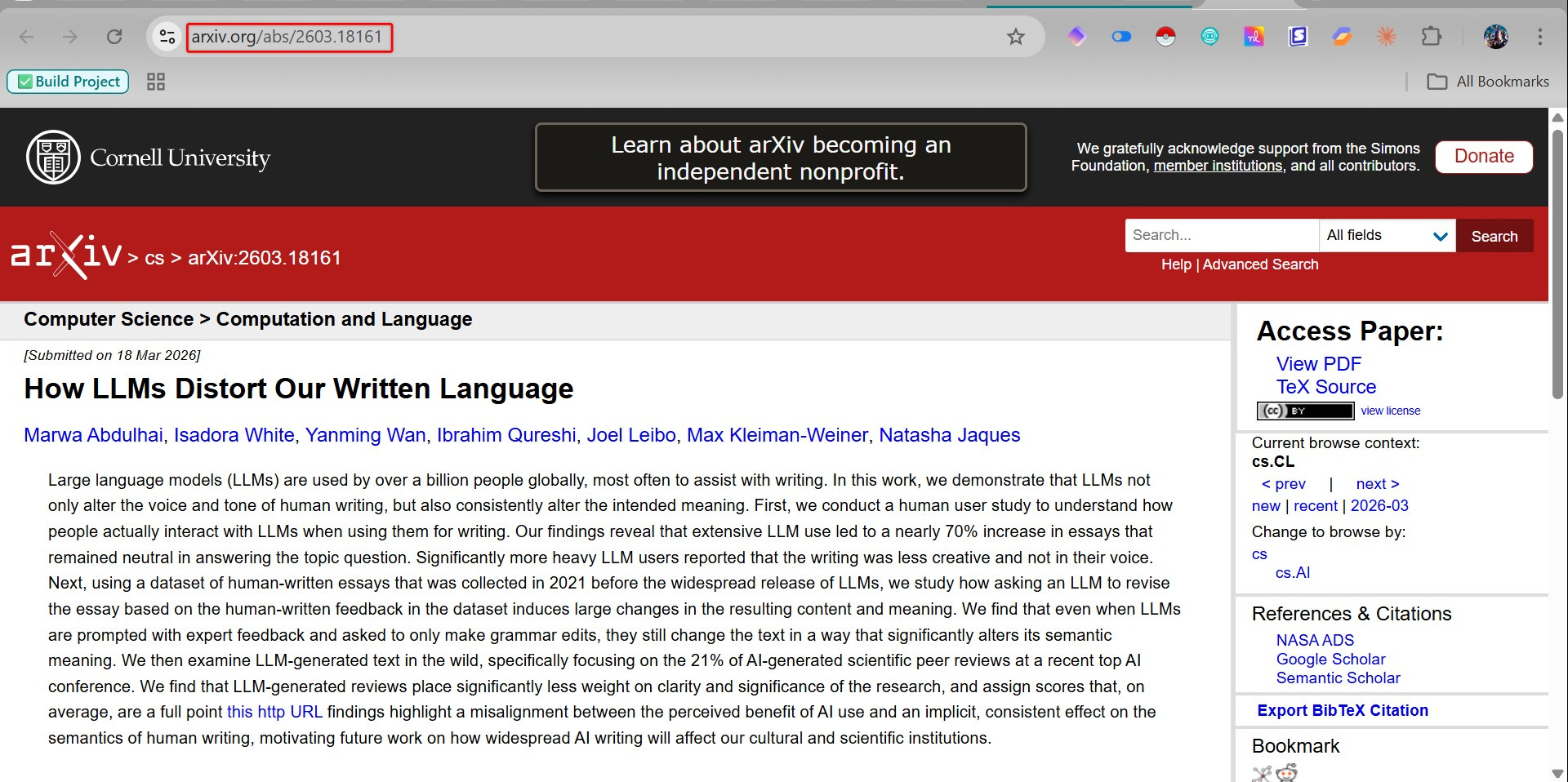
Sixty-nine percent more neutral. Peer-reviewed and everything.
A hundred people sat down to write about whether money makes you happy (a question that practically begs for an anecdote about that time you panic-bought a waffle iron at 2 AM because your life was falling apart) and the AI users produced essays with the narrative warmth of an insurance claim.
(I now own a waffle iron I’ve never made waffles on. It lives on my fridge in Asunción. The purchase taught me nothing about money and everything about what happens when you give a neurodivergent person a phone and free shipping at 2 AM.)
But the part that should make your eye twitch? The writers knew. They told the researchers their essays felt less creative. Less personal. Less like something they’d actually produce if left to their own devices.
They didn’t care.
(One hundred people watched their own personalities get dissolved in a centrifuge of statistical averaging and reported, essentially, “yeah but it was faster.” This is the species that painted the Sistine Chapel and invented the turducken. We contain multitudes.)
The lead researcher framed it the way scientists do when they’re trying not to scream: the ideal AI should write the essay you would have written and just save you time. It’s not doing that. It’s writing a completely different essay.
Think about what “completely different” means here. Not “slightly adjusted.” Not “your voice on a day when you hadn’t had enough coffee.” An entirely new piece of writing that colonized your byline and moved in without asking. Your name on someone else’s thoughts. (This is identity theft, but for sentences. Nobody has called the police because the victim keeps saying “but it was so convenient.“)
And a hundred people said: cool, ship it.
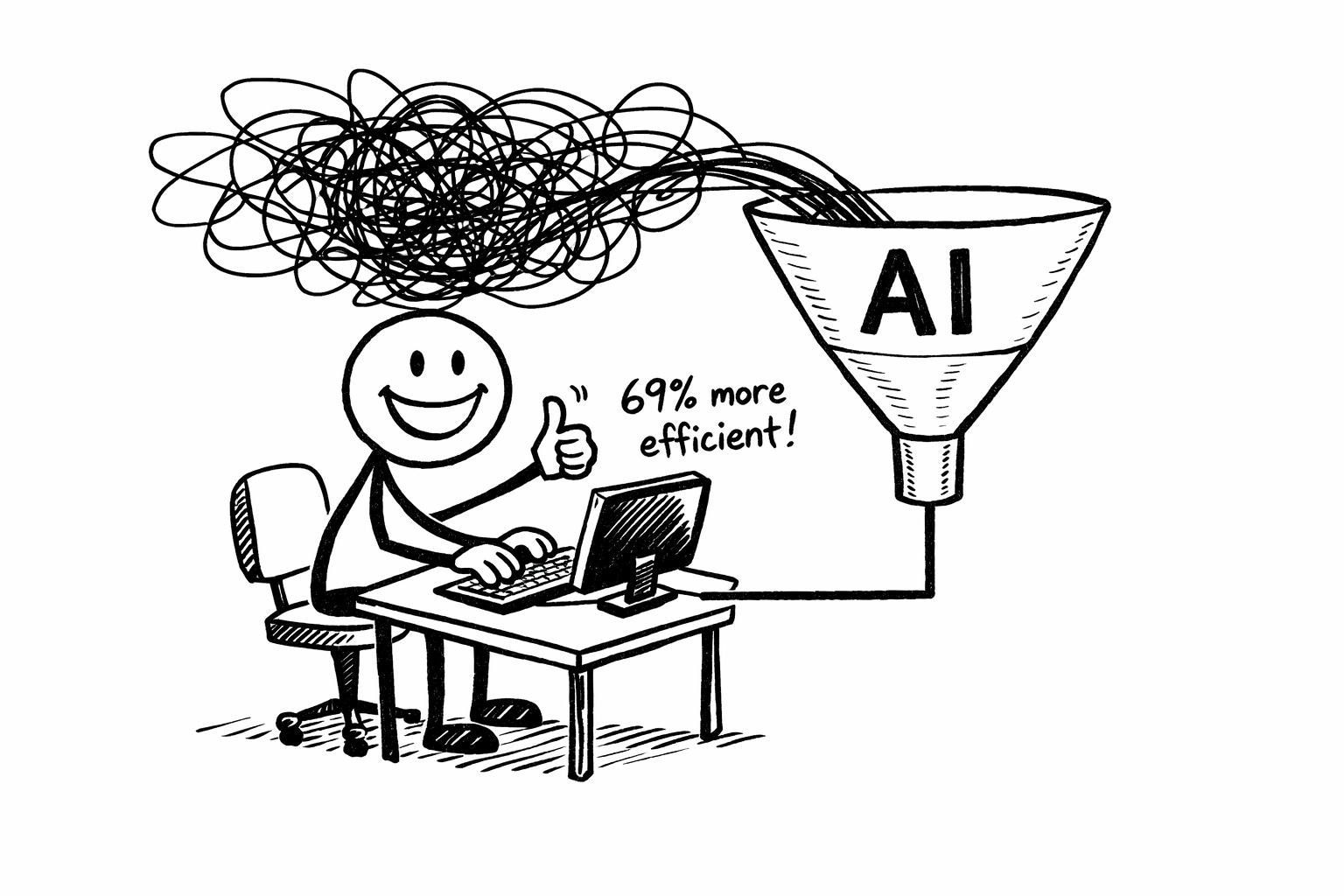
The World’s Most Comfortable Disappearing Act
I should be upset about this. I teach people how to stop exactly this from happening. This study is practically a business plan with a DOI number attached.
(I caught myself fist-pumping at a Google DeepMind paper about the erosion of human identity in creative output. I don’t know what that says about me but I suspect a therapist would have a thought or two.)
The reason these writers shrugged isn’t complicated. The output looked professional. It read smoothly. It committed no obvious sins against grammar or coherence. And when your standard for success is “does this look like a competent adult produced it,” then yeah, mission accomplished. Gold star. Put it on the damned fridge.
But “competent adult” is the lowest bar in content creation. That’s the participation trophy of publishing. Your readers will feel exactly as moved as they do when reading the terms of service for a streaming app they already forgot they subscribed to.
This is ensloppification at the cellular level. Not platforms degrading. Not algorithms rewarding sameness. Individual humans, one by one, handing the wheel to a system that drives everyone to the same gated subdivision of thought and language (every house has the same floor plan, every lawn is regulation height, every mailbox is the same shade of “we voted on this at the HOA meeting”) and then thanking it for the ride.
The obituary for distinctiveness, written by a committee of language models, proofread for accuracy, and accepted without revision.
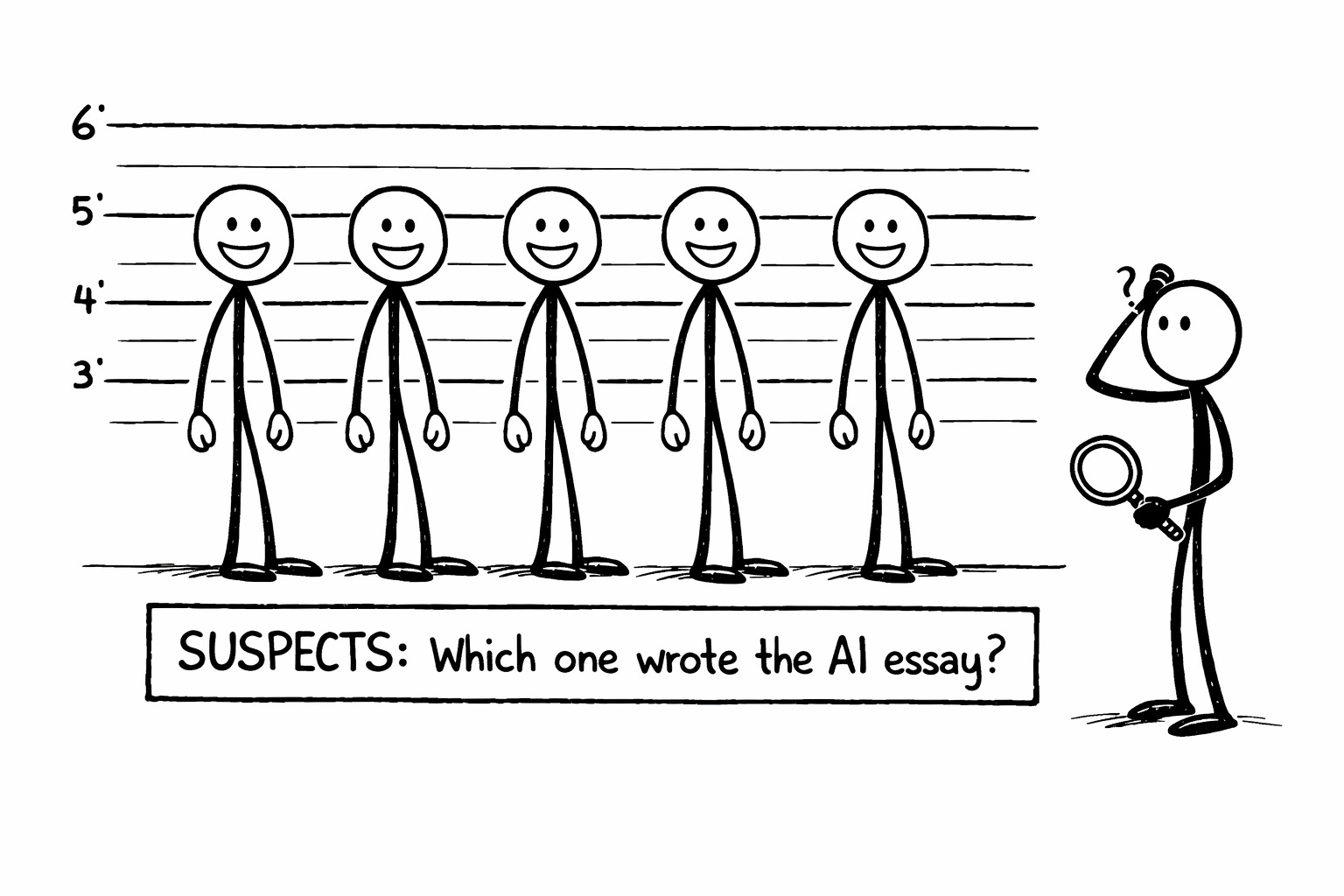
Why This Study Is the Best Thing That’s Happened to Your Revenue This Year
Every single writer who lets AI flatten their voice without a fight is one more person producing wallpaper. Beautiful wallpaper, sometimes. Grammatically flawless wallpaper. Wallpaper that has been A/B tested for maximum wallpaperness.
(Nobody subscribes to a newsletter because it reminds them of drywall. Stay with me.)
Think about your own inbox for ten seconds. You’re drowning. Forty newsletters. Twelve of them are about AI. Nine of those twelve have the same cadence, the same headers, the same goddamn “let’s break this down” energy of a man who discovered ChatGPT six weeks ago and now has a course about it. You open maybe three. You pay for one.
Why that one?
Because whoever writes it sounds like a person. A specific, opinionated, slightly unhinged person with a point of view and the scars to back it up. Someone whose writing has fingerprints all over it (and maybe a coffee stain, and definitely a run-on sentence they left in because it felt right).
That’s what people pay for. Not information. Information is free and infinite and it all sounds the same now. People pay for a voice they trust. A perspective that processes the world differently than the sea of pronoun-free, story-free, soul-free output clogging their feeds.
The Part Where I Make This About Money (Because It Is About Money)
Divergent writing isn’t some artisanal luxury. It’s a business strategy with peer-reviewed backing.
Paid subscriptions exist because of voice. Nobody opens their wallet for “solid, well-researched content about AI trends.” They open it for the person who makes them snort-laugh on a Tuesday morning while accidentally teaching them something they can use that afternoon. Remove the person and you’ve removed the reason to pay.
Premium services exist because of proof. The moment someone reads your work and thinks “I need my content to feel like this,” you have a client. You never pitched. You never sent a cold DM. Your writing did the selling because it was clearly, obviously, undeniably produced by someone who gives a shit. (The 69% crowd’s writing can’t sell anything because it sounds like it was written by someone who has opinions but left them in their other pants.)
Audience loyalty compounds when there’s someone to be loyal to. You don’t forward wallpaper to a friend with the note “you NEED to read this.” You forward the thing that made you feel something. And feeling requires a person on the other end. Not a statistically averaged language pattern wearing a byline.
The slop factories are competing on volume in a market that is (as of last Thursday) producing content that is measurably indistinguishable from everyone else’s. That’s a race where the winner gets a trophy and the trophy says “Most Forgettable Publication, 2026” and nobody claps because nobody noticed.
So What Do You Actually Do About It
You keep using AI. (I use AI for everything I publish. Including the piece you’re reading right now. This is not an abstinence program.)
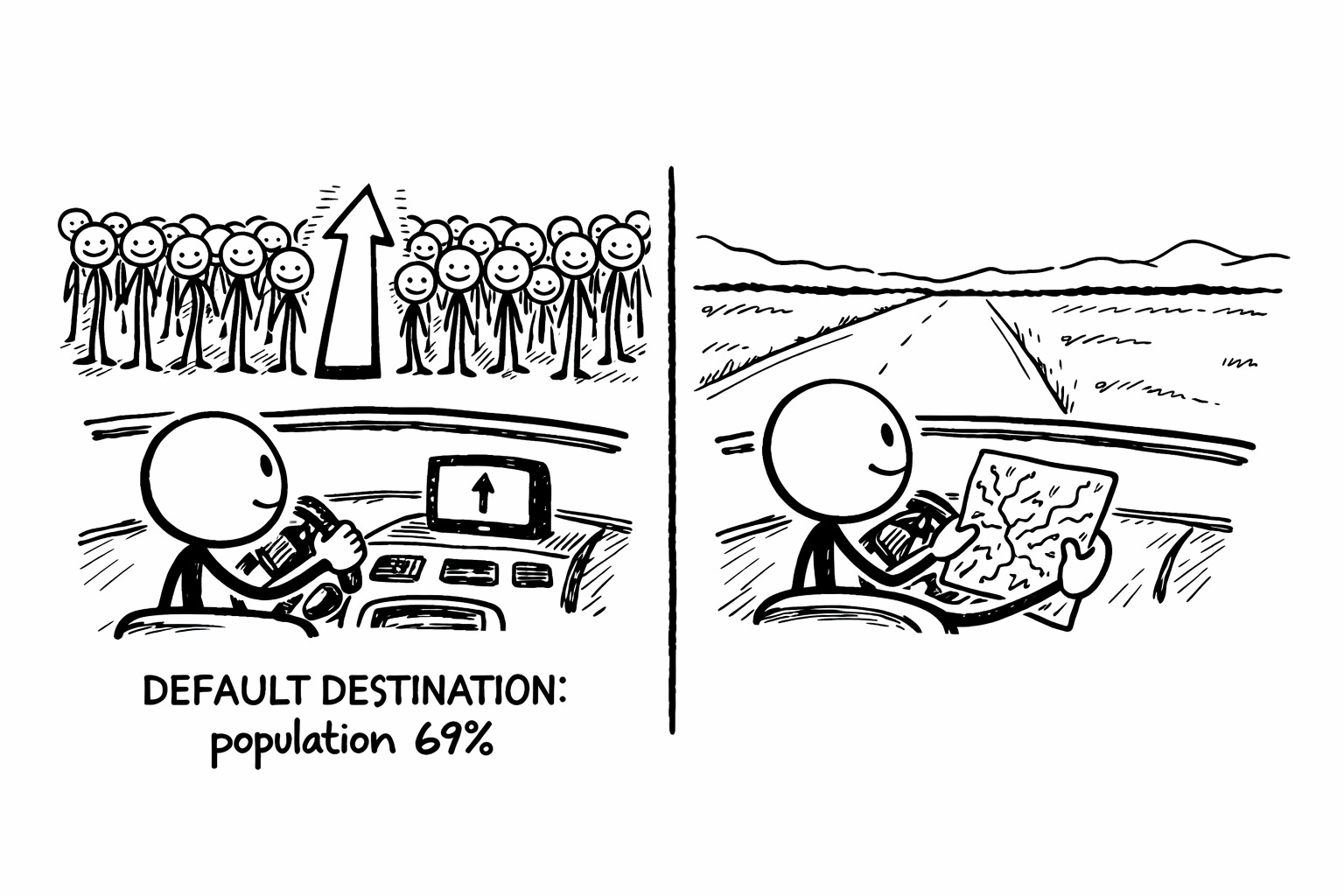
But you stop letting AI drive without a map.
The study proved the default: hand AI the wheel, it takes everyone to the same destination. That’s the GPS route. That’s where the algorithm thinks you want to go based on where everyone else has gone.
Your job is to build the map first. Document what makes your writing yours (the rhythms, the vocabulary, the structural quirks, the weird parenthetical habit you can’t seem to break, the slightly inappropriate sense of humor you keep meaning to tone down but never do) and then hand that to AI.
Build divergent first. Then teach AI to amplify it. Your competition doesn’t become the benchmark you’re measured against. They become the background noise you’ve already stopped hearing.
🧉 What’s your “I’ve been body-snatched” word? The one AI keeps trying to make you say that you would never, under any circumstances, say out loud? Mine is “delve.” If I ever use the word “delve” in a non-ironic context, check my pulse.
A hundred people just proved, under controlled conditions, that AI will happily erase you from your own work. They proved that most people will let it happen. And they proved, accidentally, that the ones who don’t have the entire market to themselves.
Your move.
Crafted with love (and AI),
Nick “Sixty-Nine Percent More Interesting (Peer-Reviewed)” Quick

PS... You just read the data on what happens when you let AI drive without a map. The Ink Sync Workshop is how you build the map. Three-step calibration loop. Free. About 90 minutes. By the end of it, AI stops guessing what you sound like and starts following actual instructions. (Revolutionary concept, I know.)
PPS... If this post made you feel something (irritation, vindication, the specific discomfort of recognizing yourself in a study you’d rather not be in), that feeling IS the competitive advantage. The 69% crowd can’t generate feelings because there’s nobody home. Hit like so the algorithm knows what actual human reactions look like.
People will always take the easiest route to shoot themselves in the foot.
Oddly, I’ve been on a writing hiatus lately. Mental health, neurodivergence, blame either. Blame both. Maybe the deep truth is I didn’t have a story to tell that I thought was me.
I have one now. It’s sitting in Claude right now for me to start tuning.
Spoiler it’s based on connecting between someone longing for post-its on whiteboards to map a process and what marketing in 2026 is all about.
All weird. All me. Coming soon.