
Your Inbox Already Knows What to Write Next
How to extract what your readers actually want (but won’t directly ask for)

You’re staring at a blank doc. Cursor blinking. Waiting for a content idea to fall from the sky like some kind of divine intervention.
Meanwhile, your inbox is sitting right there. Twenty messages from readers. Actual humans. Telling you exactly what they’re struggling with.
You’re ignoring a focus group that runs 24/7. For free. Without you scheduling a single call.
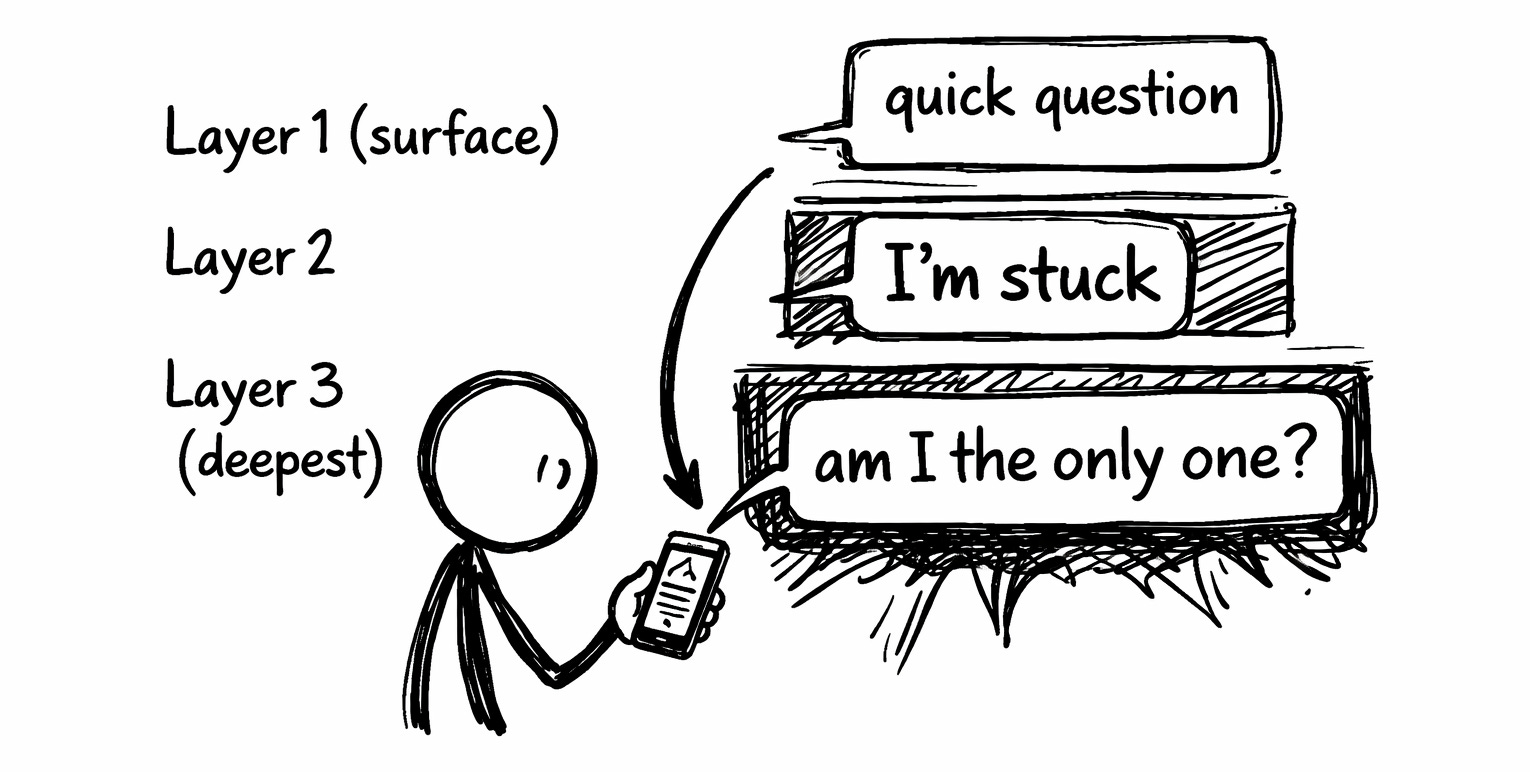
The problem: they’re not saying it directly. They ask surface questions. “What tool do you use for X?” But the subtext is something else entirely. They’re frustrated. Stuck. Wanting permission to do the thing they already know they should do. (They know. They just need someone to say it’s okay.)
You’re not a therapist. You don’t have time to read between the lines of 50 messages while also writing a newsletter, maintaining a social presence, and having a personal life. (One of these is a lie.)
AI can do the reading-between-the-lines part. In about 15 minutes.
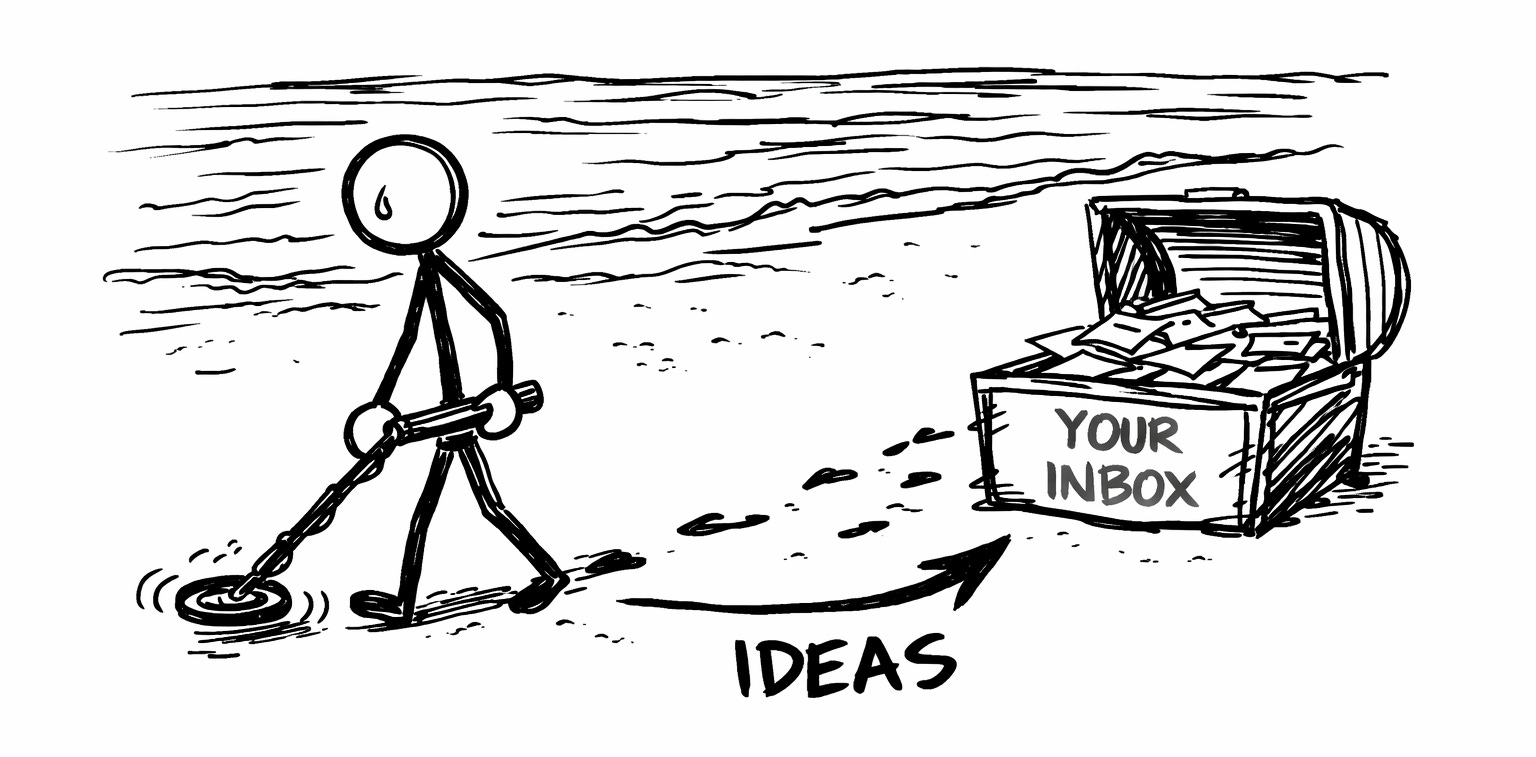
Reader messages are research disguised as conversation.
Every DM, every comment, every reply contains signal. Not just what they’re asking, but what they’re avoiding asking. The question behind the question. The frustration they dressed up as polite curiosity because they didn’t want to seem needy. (Everyone’s needy. The confident ones are just performing.)
One message is anecdote. Twenty messages is pattern. And patterns are content strategy.
You don’t need more ideas. You need to excavate the ones your readers are already handing you. Wrapped in small talk. Buried in “quick question” emails. Hiding in the comments you skimmed and forgot about.
The gold is already in the mine. You just haven’t gone digging.
The Workflow
This takes 15 minutes. Maybe 20 if your inbox is a disaster. (Mine is proof that “I’ll get back to you” is a socially acceptable way to say “I won’t.”)
Step 1: Collect 20 Messages
Pull from everywhere:
DMs (Substack, Twitter, LinkedIn, Instagram, Whatsa)
Comments on your posts
Email replies to your newsletter
Questions from your community (Skool, Discord, Slack, wherever your people gather)
Don’t curate. Don’t cherry-pick the “good” ones. Grab the mundane ones too. The boring questions are often the most common pain points dressed in forgettable clothing.
Paste them into a single doc. No formatting. No cleaning up. Ugly is fine. Ugly is the point.
Step 2: The Pattern Extraction
Prompt:
Here are 20 messages from my newsletter readers. Analyze them for patterns. What are the recurring questions? What frustrations appear multiple times? What desires are implied but not stated directly? What are they actually asking for beneath the surface question?The AI will find threads you missed. Partly because it’s reading all 20 at once instead of one at a time over six weeks. Partly because it doesn’t have your blind spots.
Step 3: The Subtext Dig
Prompt:
Now go deeper. For each pattern you identified, what’s the fear or frustration driving it? What do they want permission to do? What would they ask if they weren’t worried about looking stupid?Don’t skip this one.
The surface question “what AI tool do you use?” becomes “I feel behind and don’t know where to start and I’m scared I’m already too late.”
The surface question “how long should my posts be?” becomes “I’m terrified I’m boring people and they’re just too polite to unsubscribe.”
The surface question “do you edit your AI drafts much?” becomes “please tell me it’s okay to use AI because I feel like I’m cheating.”
Your readers aren’t asking for tactics. They’re asking for permission and reassurance with a tactical question as the disguise. (Humans are exhausting. Lovably so, but still.)
Step 4: The Content Angle Extraction
Prompt:
Based on these patterns and the subtext beneath them, give me 10 content ideas that would address what these readers actually need. For each idea, include: the working title, the core promise, and which pattern or frustration it addresses.Now you have a content calendar built from actual reader needs instead of whatever you hallucinated during your last brainstorm session.
Step 5: The Language Harvest
Prompt:
Pull out the exact phrases and words my readers used to describe their problems. These are headline ingredients and hook material.Don’t paraphrase their pain. Steal their words. They’ve already done the copywriting for you. (This is the only ethical form of theft. Probably.)
What I Found When I Did This
I dumped 20 messages into Claude last month. Readers asking about workflows, tools, how to start, whether AI was “cheating.”
The patterns I expected: people wanting tactics, step-by-step processes, tool recommendations.
The patterns I found: people wanting permission. Over and over. Different words, same fear. “Is it okay if I...” “Do you think it’s bad to...” “I feel weird about...”
One phrase appeared in some form across six different messages: “I’m tired of watching mediocre shit outperform me.”
That became a post. Then it became a series. Then it became half my positioning.
I thought I knew my audience. I was maybe 60% right. The other 40% was hiding in subtext I’d been skimming past for months like it didn’t matter. Turns out, that 40% was the whole damn point.
(Did this make me feel like an idiot for not seeing it sooner? Yes. Am I sharing it anyway? Also yes. My ego will recover. Probably.)
Most content advice tells you to “know your audience.” What it doesn’t mention: your audience barely knows themselves. They’re asking one thing and meaning another, same as everyone. Same as you. Same as me writing this while pretending I have my shit figured out. (I do not. But pretending is half the job.)
What To Do With What You Find
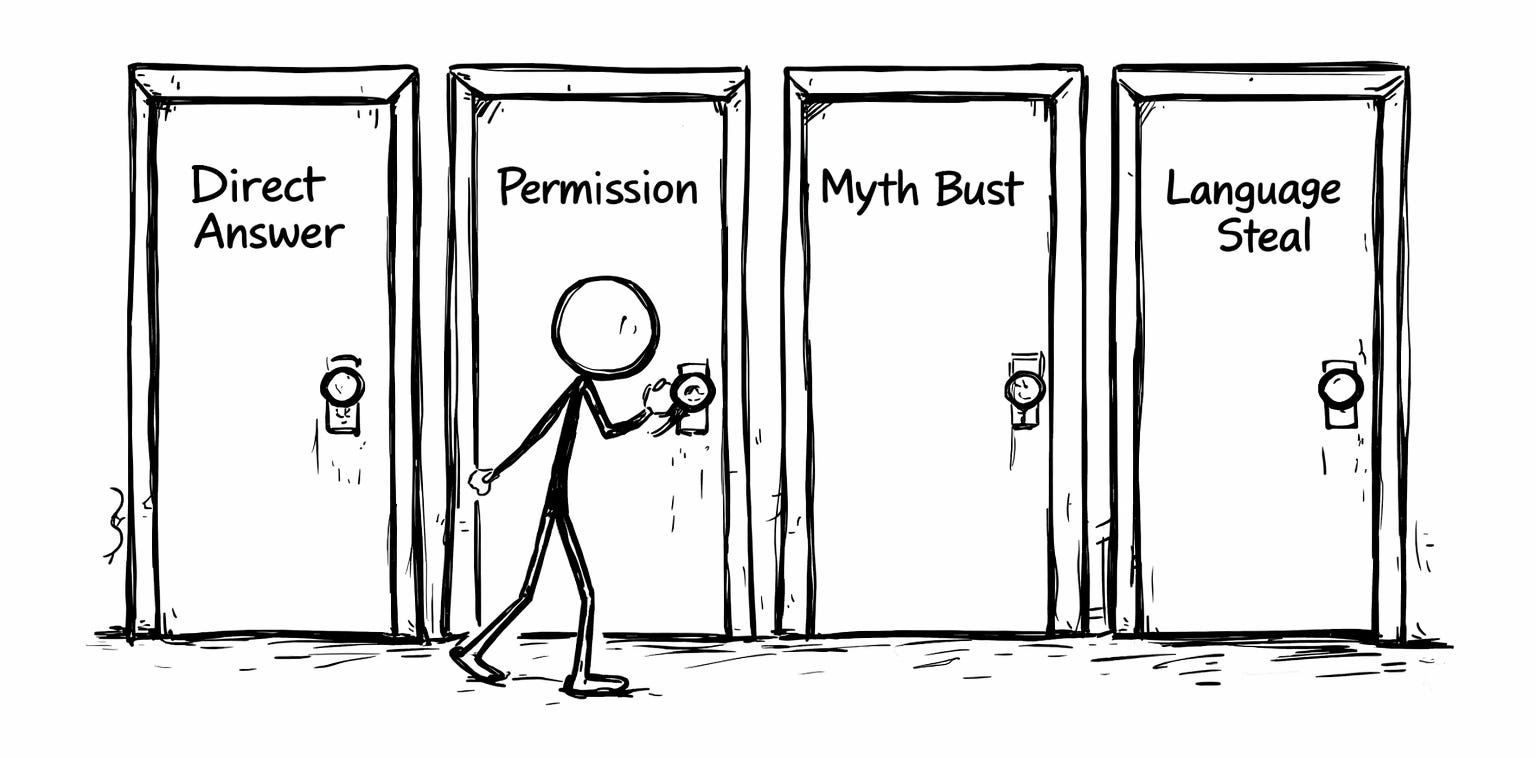
Four paths. Pick based on what surfaces.
Path A: Direct Answer Content
Turn the explicit questions into tactical posts. Layups. Give them exactly what they asked for, clearly, without making them feel dumb for not knowing already. (The bar is low. Most “beginner” content exists to make you buy the advanced course. The confusion is a feature.)
Path B: Permission Posts
Turn the subtext into “you’re allowed to do this” content. Address what they couldn’t say directly. (This is the content that gets forwarded to friends with “omg this is exactly what I needed to hear.” It spreads because you said the thing everyone was thinking and no one was saying.) These hit harder because you’re answering the question they were too embarrassed to ask.
Path C: Objection Demolition
Turn the fears into myth-busting content. “You think X, but actually Y.” Name the fear out loud. Then dismantle it. (Be rude. Lovingly. They’ll thank you later.)
Path D: Language Transplant
Take their exact words and phrases. Put them in your headlines. Your hooks. Your CTAs. Your copy gets better instantly because you’re speaking their language instead of yours. (This feels like cheating. It isn’t. It’s just listening.)
What the Slop Factories Can't Steal
Your readers are telling you what to write. Every day. In messages you’re probably archiving without a second thought.
The inbox isn’t a chore to manage. It’s a focus group that runs itself, delivers insights directly to you, and doesn’t require a calendar invite or a thank-you gift card. (No 200-slide McKinsey deck that concludes “talk to your customers.” Groundbreaking.)
15 minutes. 20 messages. A month of content that actually lands because it came from them. Not from you staring at a blank page hoping inspiration strikes like lightning on a clear day.
This is how you start burying the hacks.
Run it once. See what surfaces. I’m betting it’s more than you expect.
🧉 Which of the four paths do you use most without realizing it: Direct Answer, Permission, Objection Demolition, or Language Transplant?
Crafted with love (and AI)
Nick “Chief Subtext Officer” Quick

PS… You just learned how to extract what your readers want. Now extract what makes you sound like you.
The Voiceprint Quick-Start Guide walks you through documenting your writing patterns in one sitting. Not so AI can replace you. So it can stop guessing and start sounding like you actually wrote it.
Get it now. Don’t cost nothin’.
PPS… New workflow tomorrow. And the day after. Subscribe or miss it. And if you know a creator watching hacks win while they “wait for inspiration,” send this their way. Inspiration isn’t coming. This might help.
Nick, this is excellent tactical advice that addresses a real bottleneck in content creation. The inbox-as-focus-group insight is spot-on, and your five-step workflow gives creators a systematic way to stop "waiting for divine intervention" and start mining actual reader signals.
Where I'd push back gently: What if the patterns your readers surface are themselves symptoms of the wrong framework?
I run a parallel system called the Content Creation Template (CCT) that starts differently. Instead of mining reader questions, I mine tension landscapes—the structural contradictions in society, industries, or domains that produce the problems my readers experience. Then I diagnose whether proposed "solutions" represent Maladaptive responses (control-seeking that worsens problems) or Creative responses (paradigm shifts that transform constraints).
Example: Your readers asking "what AI tool should I use?" might surface the pattern "people feel behind." Your approach would create permission content: "It's okay to use AI; you're not cheating."
My CCT approach would ask: Why do they feel they're cheating in the first place? That tension reveals a deeper identity conflict—Creator vs. Curator, Craftsman vs. Industrialist. The Creative response isn't permission to use the tool; it's reframing the entire "authenticity vs. AI" binary as a false choice rooted in scarcity thinking.
The key difference: Your method optimizes for audience resonance (which keeps them engaged). My method optimizes for worldview transformation (which makes them see problems differently so different solutions become obvious).
Both valid. Different goals.
Your approach prevents audience misalignment—you're guaranteed to write what they want because they told you directly. My risk is writing what they need but don't yet know they need, which requires more upfront intellectual work and carries higher "will this land?" uncertainty.
The synthesis: Start with your inbox patterns to validate which tensions are active in your audience's experience. Then use CCT to diagnose whether you should give them Direct Answers or transform their framework so they ask better questions.
Your readers asking "how long should my posts be?" (fear of boring people) might need permission content. But they might also need content that reframes "engagement optimization" as Maladaptive control-seeking that prevents them from developing their actual voice—the Creative response being to stop measuring and start expressing.
Can't know which without diagnosis.
Appreciated the "lovably exhausting" framing. Dignity Index solid. Would read again.
Best,
Chris Wasden
P.S.—The "Chief Subtext Officer" signature made me laugh. We're all pretending we have our shit figured out. The ones who admit it are just more honest about the performance.