

I don’t talk to Claude the way most people talk to AI. No elaborate setup. No carefully engineered instructions. I just describe what I need like I’m talking to a co-author who’s about to hand me a rough draft.
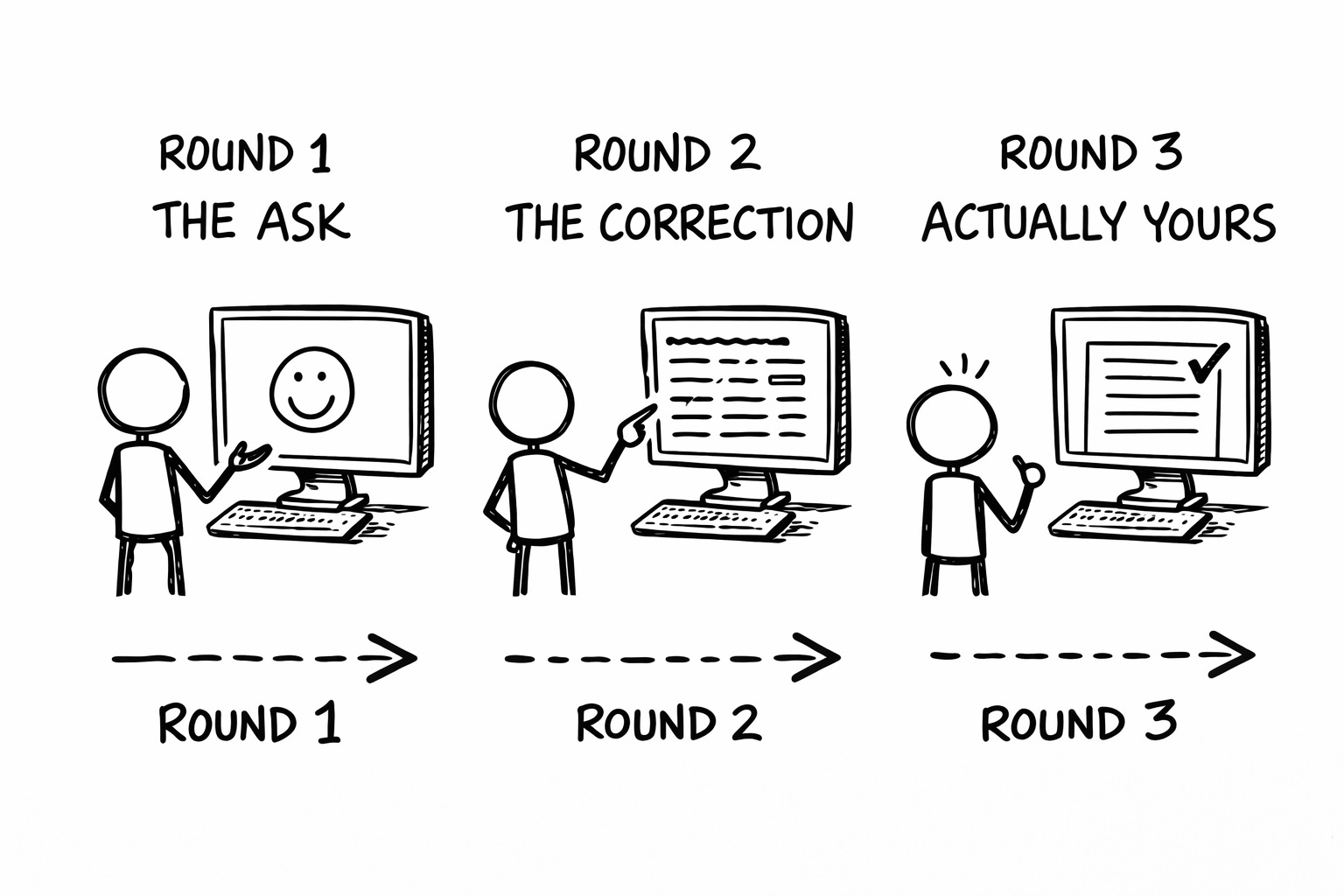
Turns out the most important part of that conversation isn’t the ask. It’s what happens after the first draft lands wrong.
Claude gives me a paragraph. I read it. Ninety percent of it is right. The structure works. The argument tracks. But there’s a phrase in the second sentence that I’d never say out loud, and the rhythm in the closing line lands flat where it should punch.
Not garbage. Not even close to garbage. That’s the problem. It’s almost right, which is worse than obviously wrong. A phrase lands weird. A rhythm choice flattens where it should bite. You can’t point to a broken thing. You can only point to the absence of your thing.
(This is the part where I tell you I’m a professional at this. I literally teach people how to co-write with AI. And I still hit this wall. Not because the system is broken. Because the last ten percent of voice is the hardest ten percent to transfer.)
Most people hit this moment and do one of two things: accept the almost-right draft with minor tweaks (hello, ensloppification) or scrap everything and start the conversation over. Both are wrong. The skill is in what you say next. The correction. The specific, surgical response that turns a ninety-percent draft into something with your fingerprints on it.
This is the Ink Sync loop in action. Direct, Reflect, Correct. But “Correct” gets treated like a footnote when it’s the whole damn engine.
And the correction has specific patterns.
Five Correction Patterns That Actually Work
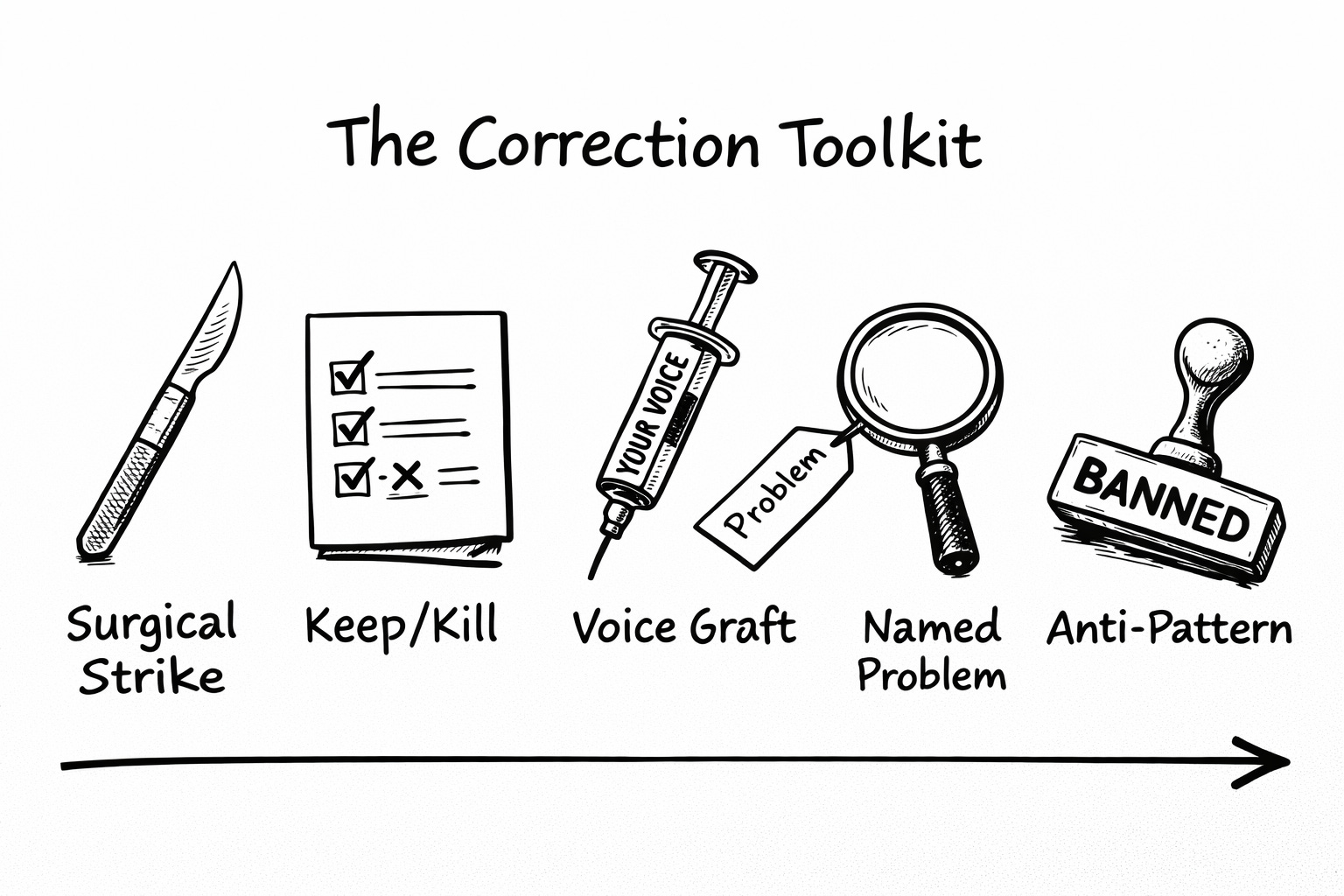
I’ve been cataloguing the specific phrases I type when I’m correcting AI output. Not the vague “make it better” instructions. The ones that produce visible shifts in the next draft. Five patterns keep showing up.
1. The Surgical Strike
Bad correction: “This doesn’t sound like me.”
Good correction: “The second paragraph opens with ‘It’s worth noting that,’ which I’d never write. I’d start mid-thought, something like ‘The problem isn’t X. The problem is what X makes possible.’ Match that energy for the rest of the section.”
The difference: specificity. “Doesn’t sound like me” gives AI nothing to work with. Pointing at the exact phrase, explaining why it fails, and showing what you’d do instead gives AI a concrete target. You’re not describing the problem. You’re performing the solution and asking AI to extend it.
2. The Keep/Kill List
Bad correction: “This needs work.”
Good correction: “Paragraph one is strong. Keep it. Paragraph two is utter slop. Kill it and replace with a specific example of [concept]. Paragraph three has the right idea but the rhythm is wrong. Shorter sentences. More fragments. The current version reads like a textbook. I want it to read like a bar conversation.”
(I stole this pattern from film editing. Directors don’t say “fix the scene.” They say “the wide shot stays, the close-up dies, the medium shot needs a different take.” Same principle. Different medium. Same result: the person doing the work knows exactly which pieces to touch and which to protect.)
3. The Voice Graft
Bad correction: “Make it more conversational.”
Good correction: “Take this sentence: '[paste the AI's version].' Now here's how I'd actually write it: '[paste your rewrite].' See the difference? The AI gave me three compound sentences in a row. I chopped the first two into fragments and let the third one run long. That's the rhythm. Apply that same transformation to paragraphs 4 through 6.”
This is the single most powerful correction pattern I use. You’re not describing your voice. You’re demonstrating it in real time, on the specific text that needs fixing, and asking AI to apply the same logic elsewhere. It’s a live Voiceprint lesson delivered in thirty seconds.
4. The Named Problem
Bad correction: “Something feels off.”
Good correction: “This has Unearned Confidence. You’re making claims without showing the work. Add a specific failure story before the framework. I need the reader to trust me before I teach them anything.”
Naming the disease helps. I keep a running list of recurring AI failure modes: Unearned Confidence (asserting without earning). Template Brain (defaulting to listicle structure). The Adequate Trap (technically correct, completely forgettable). Vocabulary Drift (slipping in words I’d never use). When I can name the problem in two words, the correction lands faster. AI responds better to a specific diagnosis than to a vague complaint.
(I realize I’m essentially teaching you how to give AI a performance review. Which is both useful and mildly dystopian. We’re fine.)
5. The Anti-Pattern
Bad correction: “Don’t make it so formal.”
Good correction: “You used ‘utilize’ twice, ‘facilitate’ once, and opened with ‘It’s important to note.’ These are exactly the words that make AI writing sound like AI writing. Replace every instance with something a person would actually say out loud. ‘Utilize’ becomes ‘use.’ ‘Facilitate’ becomes ‘help.’ ‘It’s important to note’ gets deleted entirely because nobody talks like that unless they’re reading from a teleprompter at a conference nobody wanted to attend.”
The anti-pattern correction works because it gives AI a hit list. Not “be less formal” (meaningless). A specific list of crimes with specific sentences for each one.
The Pattern Underneath the Patterns
Every good correction shares three qualities. It points at something specific (a word, a sentence, a structural choice). It explains why that specific thing fails (not just that it’s wrong, but what makes it wrong for you). And it shows or implies what you’d do instead.
Vague correction is a wish. Specific correction is a blueprint.
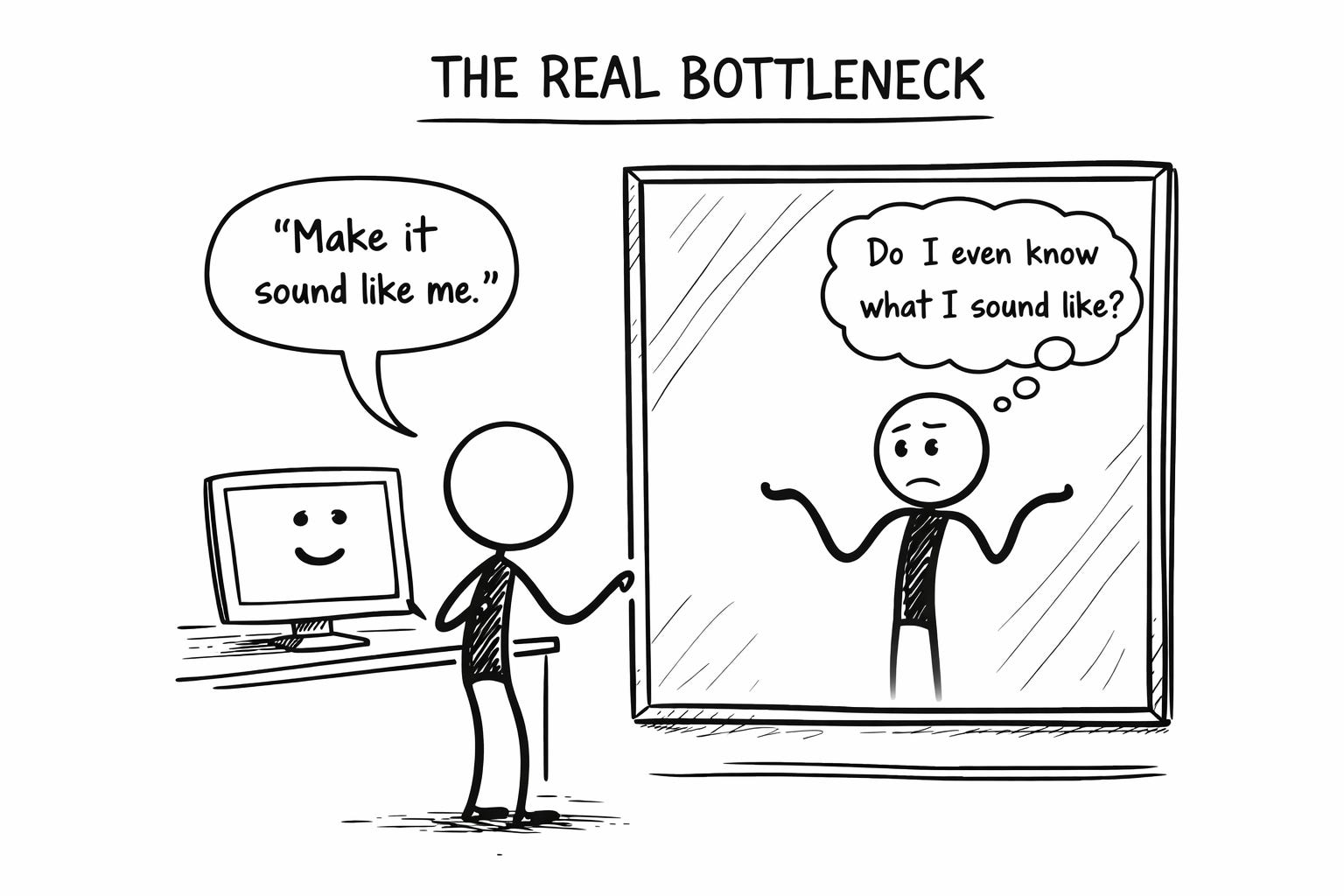
The entire AI co-writing skill, if I’m being honest about it, isn’t in how you start the conversation. It’s in the ability to read a draft, diagnose exactly where it stopped sounding like you, and articulate the fix in language precise enough that AI can execute it.
Which means the real bottleneck was never AI’s capability. It was always your ability to describe what you actually want.
(Good news: that skill improves with practice. Bad news: it requires you to understand your own voice well enough to explain it to a machine. Which is harder than it sounds. Which is, if you think about it, the entire reason the Voiceprint exists.)
🧉 What’s your go-to correction move when AI misses the mark? Do you start over, tweak and accept, or have you developed your own patterns for talking back? I’m genuinely curious what’s working for people. Drop it in the comments.
The first draft is never yours. The conversation that follows is where you take it back.
Crafted with love (and AI),
Nick “Professional Backseat Driver” Quick

PS... Everything in this post is the “Correct” step of the Ink Sync loop. If you want the full picture (Direct, Reflect, Correct) with real walkthroughs, the free Ink Sync workshop covers it:

Paid subscribers get the Voiceprint Vault with VAST templates, drift scorecards, and tools that make these corrections stick between sessions.
PPS... If this saved you from one more round of “make it more conversational,” hit the heart. If you know someone who needs it worse than you did, share it. If you’re not subscribed yet, fix that. In that order or any order. I’m not fussy.
💯 I’ve worked with a lot of AI drafts and editing them is a non-trivial challenge. But it’s the difference between shortcut and slop!