
The Content Graveyard of 2025
7 Formats We Loved to Death

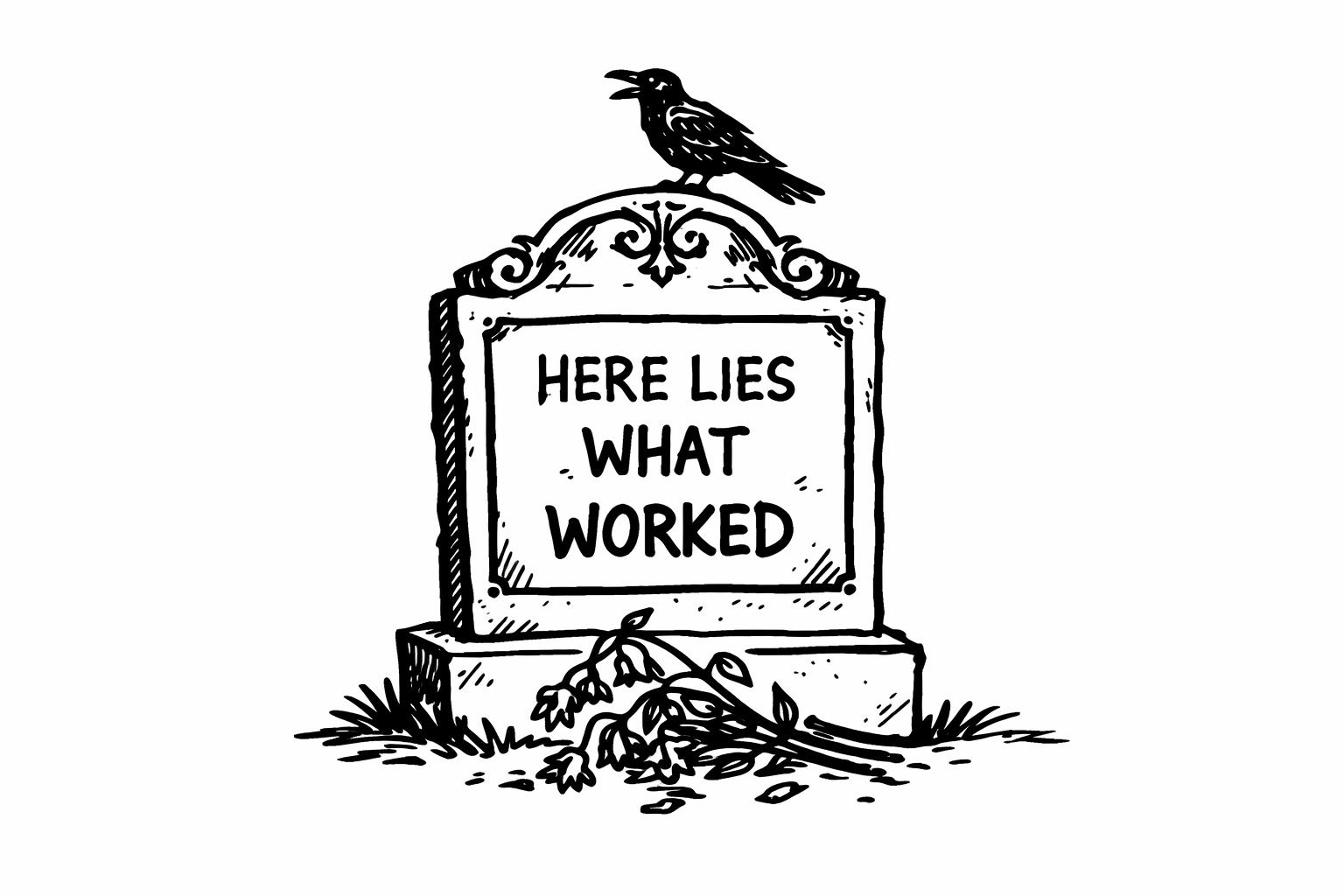
Every year, we bury a few formats.
Not because they stopped working. Because they worked too well. So well that everyone adopted them. So well that they became digital wallpaper. So well that the thing that once made them distinctive became the very reason nobody noticed them anymore.
Success, it turns out, is just a longer walk to the cemetery.
I’ve dug enough of these graves that I’m starting to feel like the industry coroner. Format rises. Format spreads. Format becomes indistinguishable from everything around it. Format dies.
The only surprising part is how shocked people act each time. Like the quicksand that promised to stop at the ankles.
Here lies the content we’re killing through convergence in 2025.
The Deceased
The LinkedIn Confession Arc
2019 - 2025
“I was fired. It was the best thing that ever happened to me.”
I remember when the first one hit my feed. Someone admitting failure publicly. On LinkedIn, of all places. The land of humble-brags and promotion announcements where everyone’s crushing it and blessed to announce their new role as Chief Synergy Architect.
And here was this person saying they’d face-planted. Spectacularly. On the professional platform where your mom’s friend’s nephew might be screening your profile for a job.
It felt revolutionary.
It was also, apparently, extremely replicable.
Within six months, my feed looked like a support group having a breakdown in public. Everyone was fired and grateful about it. Everyone’s rock bottom had a trampoline. Every failure came pre-packaged with redemption arc.
The vulnerability wasn’t wrong. The template was. (You can’t fill-in-the-blank your way to authenticity. Though God knows Canva tried to help.)
Now I see a confession post starting and my thumb’s already scrolling past before my brain catches up. The format trained me to ignore it. The format trained everyone to ignore it.
Turns out you can’t mass-produce vulnerability any more than you can mass-produce an orgasm. (Though LinkedIn influencers keep faking both.)
Cause of death: The redemption arc became a Mad Lib. Insert failure. Insert lesson. Insert hashtag. Collect engagement. Feel nothing.
The Carousel
2020 - 2025
Ten slides. Same fonts. Same structure. Swipe swipe swipe.
The carousel was a beautiful hack. Instagram rewarded swipes. Each swipe counted as engagement. You could game the algorithm by making people work for your content, and the algorithm would reward you for it.
A genuinely clever exploit. (Respect where it’s due.)
Then everyone figured it out.
And suddenly every carousel looked like it was born in the same Canva template factory, raised on the same sans-serif fonts, educated in the same “10 Tips About [Topic]” structure.
I swiped through three carousels yesterday and couldn’t tell you which creator made which. They’ve achieved a kind of content communism where everyone’s equally forgettable.
Once a way to stand out. Now a way to disappear. The visual equivalent of everyone showing up to a party in the exact same outfit and pretending not to notice.
Cause of death: When everyone’s standing out the same way, nobody’s standing out. The carousels didn’t stop working. They just stopped being seen. There’s a difference. The engagement metrics don’t know it, but the humans do.
The Shocked Thumbnail Face
2017 - 2025
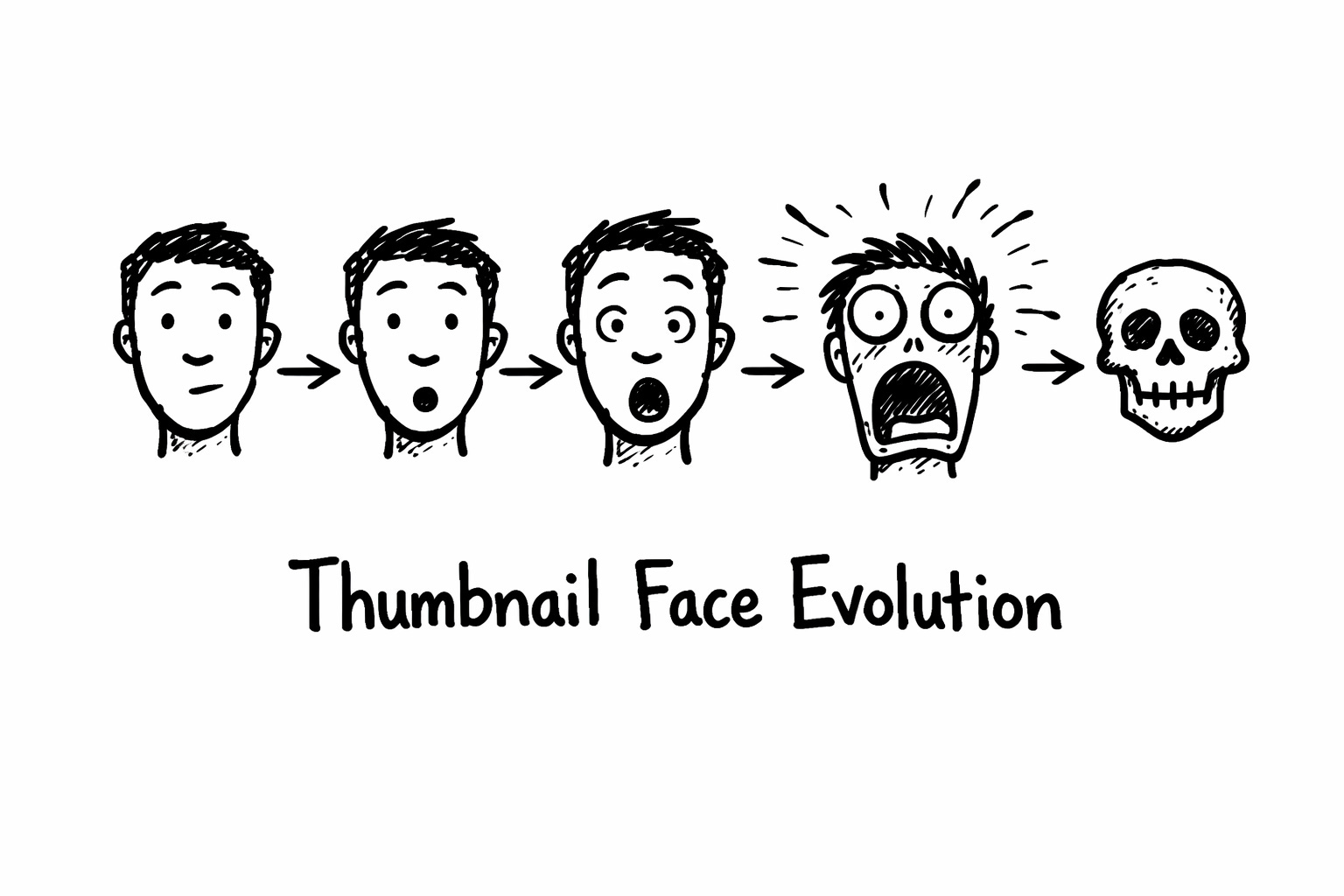
Mouth agape. Eyes wide. Hand pointing at nothing.
YouTube taught us a valuable lesson: human faces showing emotion drive clicks. Which is true. We’re wired to respond to expressions. It’s evolution. It’s psychology. It’s science.
So everyone started making the same face.
The open-mouth shock. The exaggerated surprise. The hand pointing at thin air as if something absolutely unbelievable is happening just outside the frame. (Spoiler: it isn’t. It’s a video about sunning your perineum.)
The face became a kind of visual screaming. Every thumbnail yelling for attention like tourists in Times Square trying to hand you a mixtape.
MrBeast himself started closing his mouth. When the man who popularized the format abandons it, perhaps take the hint. (The rest of YouTube hasn’t. They’re still out there, jaws dislocated, pointing at their subscriber counts.)
Cause of death: The expression stopped meaning “this is surprising” and started meaning “this creator will sacrifice their dignity for a click.” Which, honestly, might be worse than no clicks at all.
“DM me [KEYWORD]”
2022 - 2025
Comment a word, trigger a bot, call it relationship building.
For about six weeks, this was genius.
The scarcity play. The exclusivity theater. Comment “SECRETS” and I’ll personally slide into your DMs with my frameworks for success. It felt special. Personal. Like you’d cracked some code the plebeians hadn’t figured out yet.
Revolutionary, really.
For six weeks.
Then everyone realized the “personal DM” was a ManyChat sequence. We weren’t in on a secret. We were in a queue.
The relationship was automated. The exclusivity was fiction. The secret framework was a PDF they could’ve grabbed from a link in bio if anyone had the decency to just put it there.
Cause of death: Nothing kills trust faster than pretending automation is intimacy. (Though to be fair, the automation was very efficient at killing trust. Ten out of ten for productivity.)
The Thread That Should’ve Been a Post
2021 - 2025
One idea. Seventeen tweets. Fourteen filler.
Twitter rewarded threads. More tweets meant more engagement meant more reach. The algorithm had spoken.
So everyone stretched.
One reasonably good thought became a 25-tweet odyssey. The intellectual equivalent of a heist movie where they spend two hours planning to steal 100 Grand from a Kum & Go. The candy bar. Not the cash.
“This is important (1/17)”
No. No, friend, it wasn’t.
The ratio of insight to padding approached homeopathic levels. (For the uninitiated: homeopathy is the practice of diluting something until nothing’s left but the memory of usefulness. Which describes most threads perfectly.)
I started checking thread length before reading. Anything over ten tweets better be explaining quantum entanglement or I’m out.
Cause of death: We weren’t writing for readers anymore. We were writing for a recommendation engine that rewarded volume over density. The algorithm got what it wanted. The readers got nothing.
The Webinar That’s Actually a Pitch
2015 - 2025
Fifteen minutes of “value.” Forty-five minutes of sell.
We all know this one.
Register for the “free training.” Sit through the origin story. The credibility stack. The teaser frameworks. The social proof parade. The carefully calibrated moment where they reveal the thing you actually wanted to learn, except they don’t, because that’s in the course.
Then—finally—the reveal.
“For just $1,997...”
Everyone knew by minute three. Everyone stayed anyway.
(Sunk cost is powerful. So is the desperate hope that maybe this webinar will actually teach something. It won’t. But hope springs eternal. And so do tripwires.)
Cause of death: Collective exhaustion. The format didn’t die because it stopped working. It died because everyone got tired of being patient. “Free webinar” now reads as “sixty-minute hostage situation.” The trust is gone.
The AI “Personal” Post
2023 - 2025
“I’m thrilled to announce...” “Excited to share...” “Grateful for the opportunity...”
This one’s fresh.
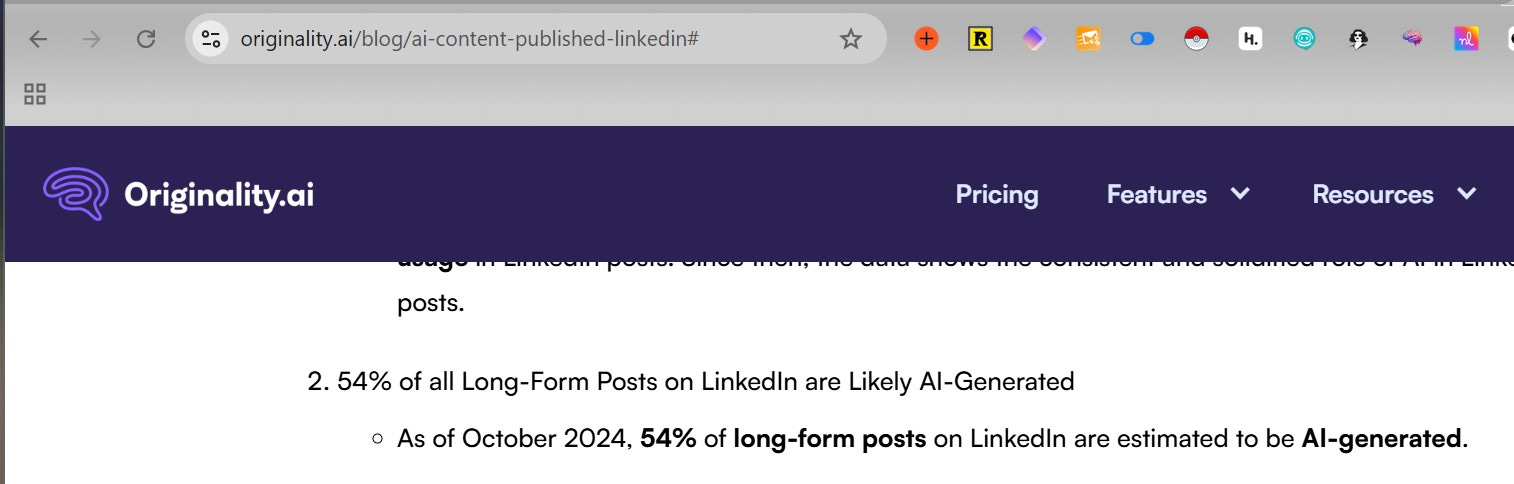
Fifty-four percent of long-form LinkedIn posts are now AI-assisted. (Not a made-up number.) You can identify them by their complete absence of rough edges.
No awkward phrasing. No personality quirks. No sentence fragments that technically break rules but sound like someone actually talking.
Just smooth, polished, utterly forgettable text. Professional. Competent. Generic as an TGI Friday’s in Missouri.
Cause of death: Inbreeding. AI trained on humans. Humans started imitating AI. AI trained on that. Three generations and the content has the genetic diversity of a Habsburg jaw.
The Pattern Nobody Wants to See
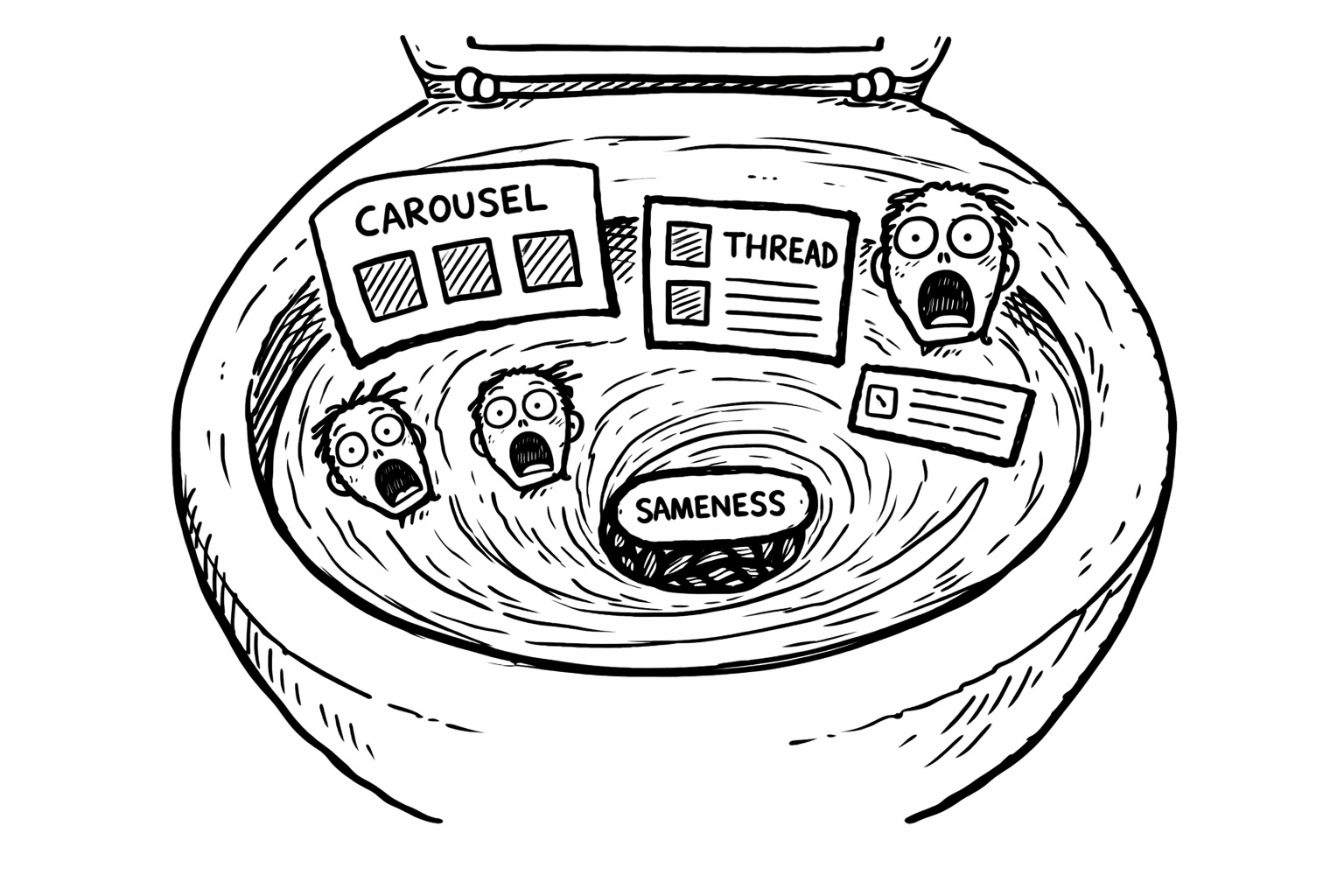
None of these formats were bad.
They became bad when success made them spread. When everyone piled on. When the pattern became so ubiquitous that following it guaranteed you’d disappear into the crowd you were trying to escape.
The graveyard isn’t full of failed experiments.
It’s full of successful ones we loved to death.
The tragedy is almost Greek. Except the Greeks had the decency to end their tragedies after three acts. We just keep posting.
Every format that worked contained within it the seeds of its own destruction. The success attracted imitators. The imitators diluted the novelty. The diluted novelty stopped working. And everyone stood around wondering what happened.
What happened was convergence. It always is.
You can’t solve this by finding the next format. That’s just sprinting toward the next grave.
The Uncomfortable Part
So what do you do?
The format-chasers will tell you to jump early. Catch the wave before everyone else. Ride it until it crashes. Repeat forever.
Which sounds exhausting. And temporary. And suspiciously like a hamster wheel with better branding.
The alternative is harder. (Isn’t it always.)
Build something that doesn’t depend on format novelty. Something that stays distinct because the voice is distinct. Not because the structure hasn’t been copied yet.
That means doing the work most people skip. Actually developing a voice worth hearing. Actually documenting what makes it different. Actually giving AI instructions specific enough to amplify your patterns instead of drowning them in the average.
The formats will keep dying. The only question is whether your content dies with them.
What format would you add to the graveyard?
I’m collecting eulogies. Reply with your nomination. I’ll add it to the cemetery plot if it qualifies.
(Qualifications: must have worked brilliantly, must be dying of success, must make people uncomfortable when you point out it’s dead.)
Crafted with love (and AI),
Nick "Tasteful Urns Available" Quick

PS…Subscribe. I post too much. It’s becoming a problem. (Not for you though. You're not my chihuahua, Butters, watching me frantically type in my underpants at 2:30am.)