
Mourning in the Middle of a Gold Rush
AI made writing easier. So why do writers feel like they lost something?

Something weird is happening in the AI writing conversation.
Everyone's talking about efficiency gains. Time saved. Output multiplied. The productivity metrics are orgasmic. Tech bros are describing their workflows like first loves. Silicon Valley found God in a spreadsheet.
The comments are all confetti. The DMs tell a different story.
There’s a grief nobody’s naming. And the silence is doing more damage than the loss itself.
The Feeling You’re Not Supposed to Have
Here’s what I keep hearing. Never directly. Always sideways, like a confession slipped into small talk:
“I should be happy about this.”
“I don’t know why I feel weird.”
“It’s probably just me being dramatic.”
It’s not just you. It’s not dramatic. And the reason you feel weird is because you’re grieving something, but nobody’s given you permission to call it that.
Because mourning in the middle of a gold rush makes you look crazy.
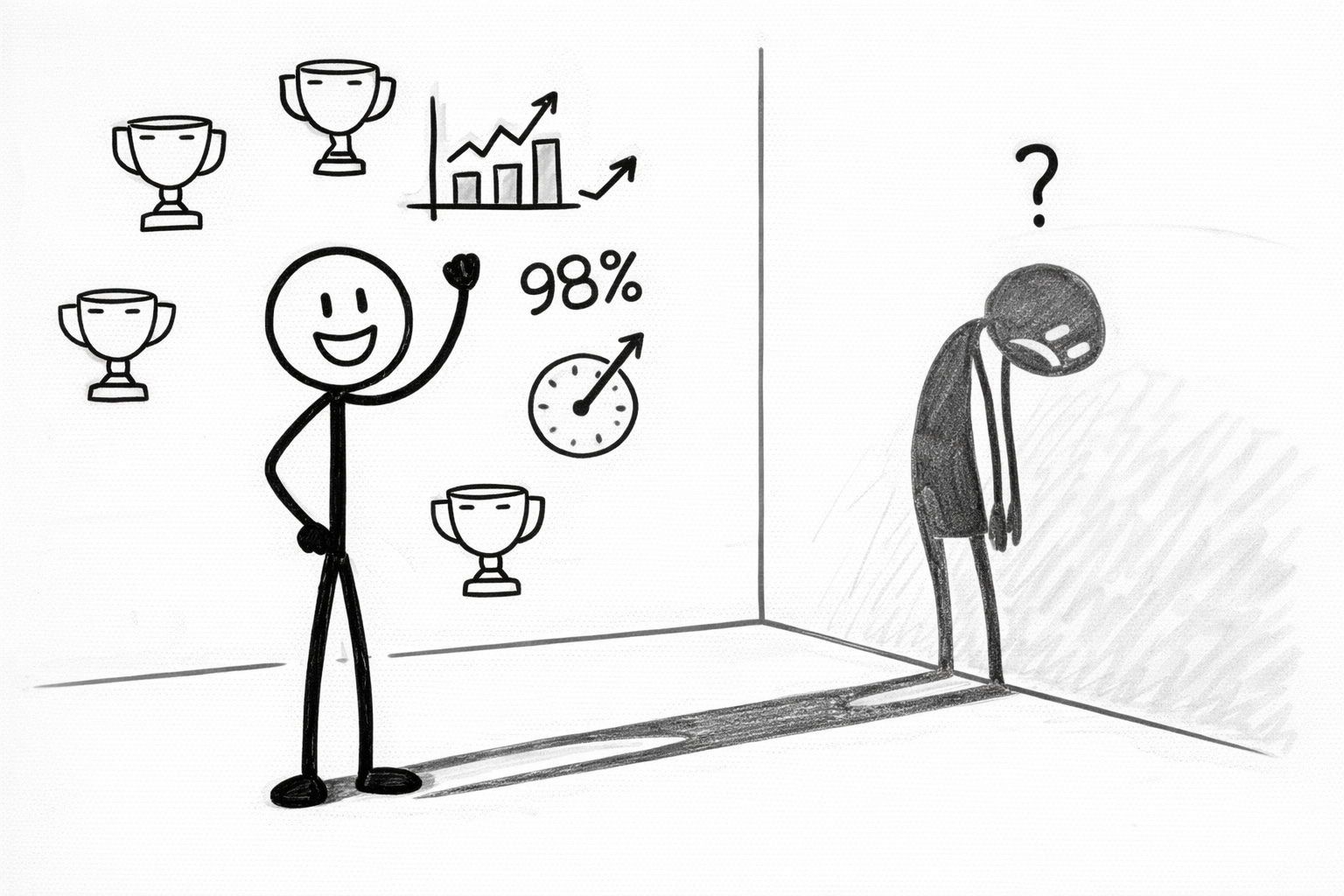
The AI writing transition isn’t just about gaining efficiency. It’s about losing specific creative experiences that shaped us as writers. Experiences we didn’t know we needed until they started disappearing.
And we’re not allowed to mourn them.
Tech optimists call it Luddite nostalgia. (Bold accusation from people who’ve made “disruption” their entire personality.) Productivity advocates say we’re romanticizing inefficiency. Both responses shut down the conversation before it starts.
Neither leaves room for the possibility that you can embrace the tools AND mourn what they replace.
That progress can be both good and grievable.
(Progress can be both good and grievable. I’m going to keep saying it until one of us believes it.)
What We’re Actually Losing (The Specific Stuff Nobody Will Say Out Loud)
Let me name some of what’s disappearing. See if you recognize yourself. Feel free to lie about it. I sure will.
The 3AM breakthrough. That moment when you’d been wrestling with a paragraph for hours and suddenly something clicked. Not “the AI generated three options in seconds.” Something clicked. You made it work. You earned it the way you earn a callus or a grudge. That specific hit of “I actually did this” doesn’t have an equivalent when the struggle is optional.
The earned sentence. Building something word by word. The satisfaction was in the construction, not the completion. Now sentences arrive like Amazon packages. Convenient. Fast. You had to check your order history to remember what’s sitting on your doorstep.
The identity formation. You became “a writer” through the wrestling. Through the bad drafts nobody saw. Through the nights when you considered whether “administrative assistant” was really so bad. The struggle wasn’t just the process. It was the proving ground. Skip the struggle, skip the proof. (And then wonder why you feel like a fraud. A mystery for the ages.)
The affair you were having with language. Just you and the words, behind closed doors, fighting it out like a couple that should probably break up but won't. The ugly drafts stayed between you. That privacy made honesty possible. Now you've invited a third into the bed. Very modern. Very consensual. (Still feels like you cucked yourself somehow.)
None of this is productivity. None of this shows up in metrics. None of this would survive a boardroom presentation.
All of it mattered.
And now it's optional.
Why the Silence Is Actually Killing Us (Not Just Making Us Sad)
The grief we’re not processing is showing up anyway. Like water finding cracks in a foundation. Like resentment finding its way into Thanksgiving dinner.
I’m watching writers who can’t name what they’re losing start compensating in ways that would make a therapist wince:
The Purists. Rejecting AI entirely. Performing authenticity like it’s a competitive sport. Exhausting themselves while the slop factories win on volume. They’re burning out on principle while pretending it’s sustainable. (It’s not. The math doesn’t work. The math never worked. Principles are wonderful until they meet spreadsheets.)
The Over-Automators. Letting their voice erode because the output is “fine.” The output is fine. Their voice is dying. These are different things. Confusing them is how you wake up one day and can't tell your posts apart from the slop you're supposed to be beating
The Imposter Spirals. If AI can write like me, was I ever special? Was I ever actually good, or just patient enough to grind it out while everyone else had the sense to do something else with their lives?
The Secret Shamers. Using the tools but never mentioning it. Pretending every word is still hand-crafted. The fraud feeling follows them into every piece like a bill collector with excellent tracking skills.
The grief you don’t name doesn’t disappear. It just finds uglier outlets.
We’re all so busy pretending everything’s fine that we’re falling apart in ways we won’t admit.
The Question Nobody’s Asking (Possibly Because the Answer Terrifies Us)
What happens to a muscle you stop using?
What happens to taste you stop developing?
What happens to a voice that never has to fight for itself?
Maybe nothing. Maybe everything. I genuinely don’t know.
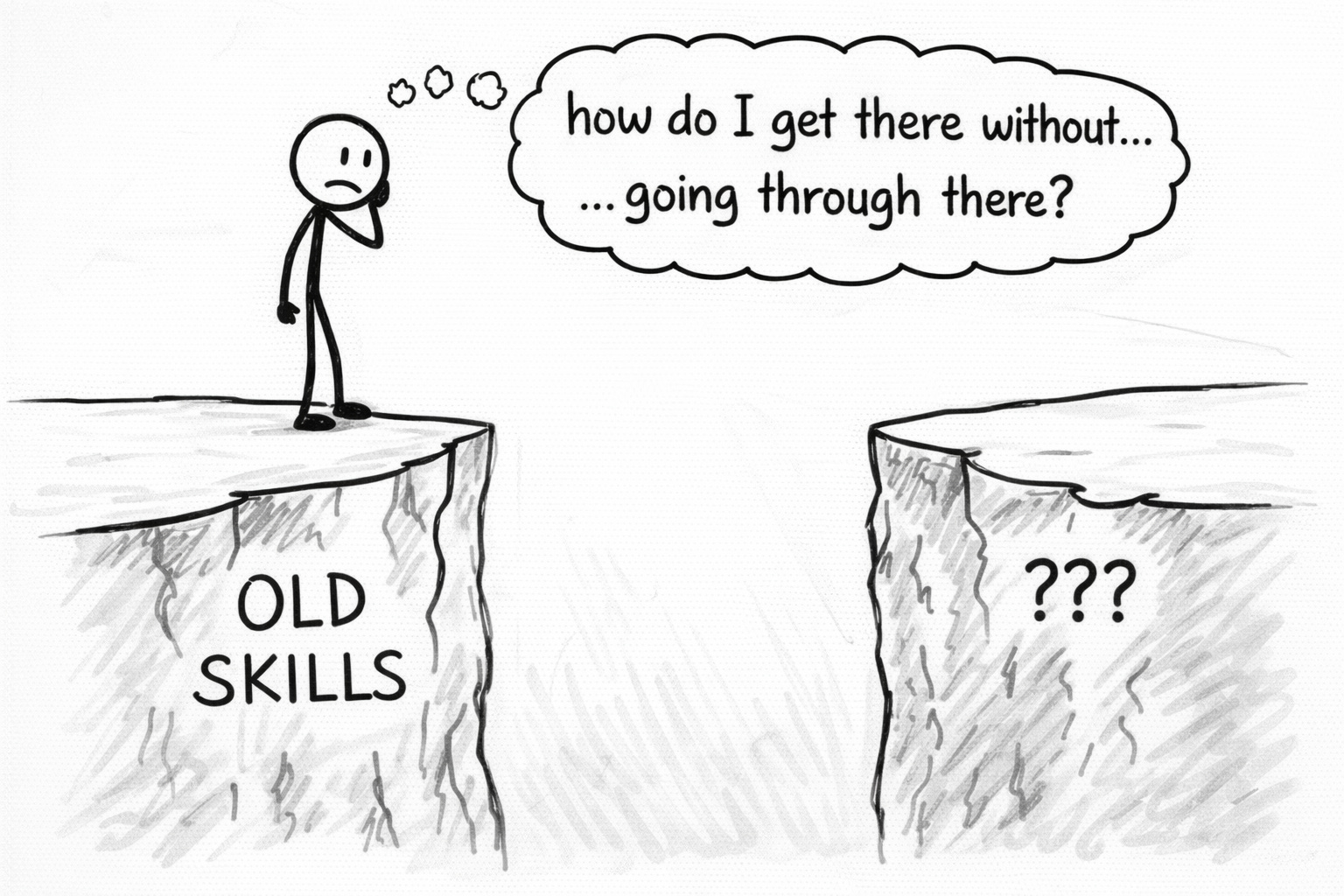
But we can’t find out until we stop pretending there’s nothing to grieve. The silence isn’t protecting us. It’s just making us feel crazy for noticing what everyone else is also noticing but refusing to say.
The Reframe (Or: What If Feeling Bad Is Actually Good News)
What if the grief isn’t a problem to solve?
What if it’s information to use?
Grief points to what mattered. If you’re mourning the struggle, that means the struggle had value you can name. And what you can name, you can look for somewhere else.
The struggle doesn’t have to disappear. It just... relocates.
Maybe the 3AM breakthrough becomes the 3AM revision session where you fight for what AI missed. Where you catch the words that are technically correct but emotionally bankrupt.
Maybe the satisfaction of the blank page becomes the satisfaction of not needing to prove you can suffer for it anymore. You already know you can. Now you get to choose when.
Maybe the identity of person who writes well becomes person who can tell when it’s working and when it’s just... there.
From wrestling the blank page to wrestling the generic draft. Different muscles. Same forge.
(The forge just moved buildings. Didn’t leave a forwarding address. You have to go looking for it.)
The creators who’ll actually thrive aren’t the ones who skip all struggle. They’re the ones who figure out where the struggle relocated.
But you can’t find the new forge if you’re pretending you don’t miss the old one.
The Permission Slip (Since Apparently We Need One)
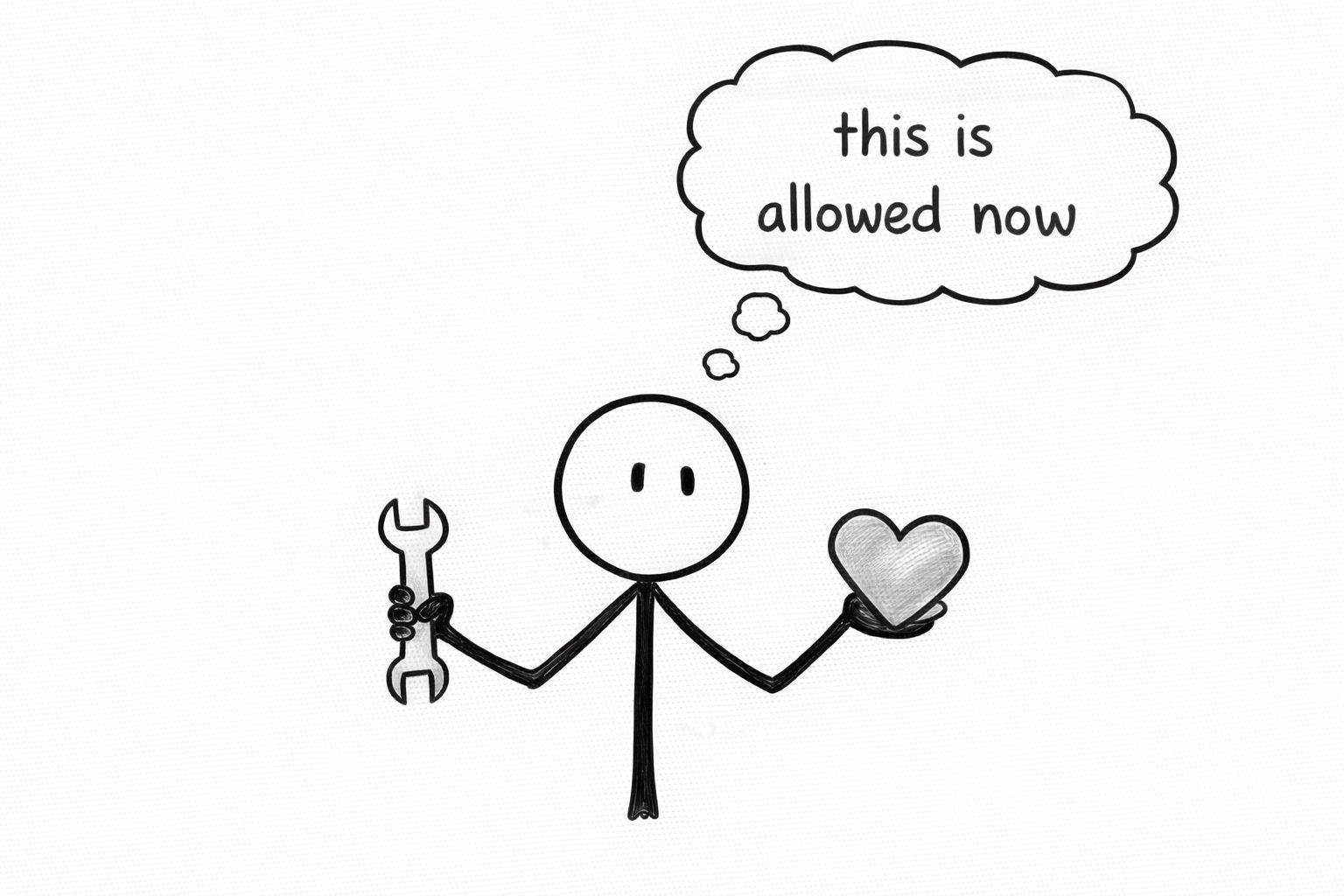
You’re allowed to grieve.
You’re allowed to miss the 3AM breakthroughs even while you sleep through the night.
You’re allowed to feel loss even when using the tools that caused it.
You’re allowed to use AI and wonder what you’re losing.
You’re allowed to be efficient and wistful at the same time.
This isn’t weakness. It isn’t nostalgia. It isn’t that romantic attachment to suffering that artists are accused of when they complain about anything.
It’s honest accounting.
The books don’t balance if you only count the time saved and not the experiences foregone. Both columns are real. Both matter. Pretending one doesn’t exist doesn’t make you more enlightened. It just makes you less honest. And eventually, less good at the thing you’re trying to be good at.
The writers who’ll keep their voices intact through this transition won’t be the ones who pretend nothing’s being lost.
They’ll be the ones who grieve clearly, then redirect deliberately.
Mourn the old forge. Find the new one. Both, in that order.
Breaking the Silence (The First Step That Actually Matters)
The first step isn’t fixing anything. Isn’t finding the new forge. Isn’t building some elaborate coping mechanism with spreadsheets attached.
It’s naming.
Write down ONE specific creative experience you miss (or fear losing) to AI assistance. Not abstract. Specific.
Not “the craft.” The craft is too big. The craft is what people say when they haven’t done the work of figuring out what they actually mean.
The specific thing. The satisfaction of landing that metaphor after a dozen wrong ones. The paragraph that fought you for an hour and then surrendered. The identity of being someone who could wrangle words when words were hard.
Name it. That’s not wallowing. That’s the beginning of honest adaptation.
The silence was never protecting us. It was just making us feel alone in something we’re all experiencing but nobody will admit at parties.
You’re not crazy. You’re not dramatic. You’re not a Luddite with a laptop.
You’re paying attention to what’s actually happening.
You’re mourning in the middle of a gold rush. That takes guts.
🧉 Discussion Thread: What’s the creative experience you miss most? Even if you’re glad for the efficiency that replaced it? Break the silence. Say the specific thing. The one you’re maybe not supposed to admit. I’ll go first in the comments.
Crafted with love (and AI),
Nick "Luddite with a Laptop" Quick
PS… I write every day now. (The irony of using AI to write more is not lost on me. Nothing is lost on me. That’s the whole problem.) AI collaboration. Keeping your fingerprints on the work. The grief, the craft, the dark humor required to survive both. Subscribe if you want company.
Watch me build GriefGPT in just 2 minutes.
JK.
This article is very on point, everyone is going through this (or must), and yes we should talk more about it. Just as social media (apparently) replaced real social contact, AI is sometimes replacing writing with its Happy Meal alternative.
We should be cautious and get a healthy relationship with it. That means sometimes putting AI down, just like your smartphone.
The thing I miss: staring at a blank page and not knowing if I had anything. The terror was real. But so was the proof when something showed up anyway.
Now I always have something. I'm never sure if it's fully mine.